
How to Balance Your 7 Chakras: A Comprehensive Guide to Chakra Alignment and Healing
Date 2/9/2026
Explore More:
Chakras
Drawing on established spiritual traditions and contemporary holistic practices, mastering chakra alignment is a powerful way to unlock your energetic potential. This guide delves into the fascinating world of the seven chakras, providing clear insights into identifying imbalances and offering practical techniques for balancing and healing each energy center. Understanding these vital energy points, known as 'chakras' derived from the Sanskrit word for 'wheel' or 'disk', originated in ancient Hindu and Buddhist texts, representing spiritual energy hubs along the spine. These centers are believed to govern various aspects of our physical, emotional, and spiritual well-being, influencing everything from primal instincts to divine connection. When these energy centers are spinning optimally, enabling the free flow of life force energy or 'prana' and 'kundalini energy' throughout your system, you experience peak health and spiritual connectivity. Conversely, imbalances can lead to a range of challenges, highlighting the importance of learning how to balance chakras for overall wellness.
If you're experiencing difficulties, consider exploring your energetic body, from the base of your spine to the crown of your head, to pinpoint where a chakra might be blocked, overactive, or underactive. These days, many individuals find great benefit in actively engaging with their chakra health. Fortunately, effective chakra healing and balancing practices are accessible to everyone, empowering you to restore harmony and vitality.


What Does Science Say About Chakra Healing?
While the concept of chakras is deeply rooted in ancient spiritual traditions and not yet directly recognized by Western medical science, the practices associated with chakra balancing offer empirically supported benefits. For instance, activities like yoga, meditation, and breathwork, often recommended for chakra alignment, are widely studied and proven to reduce stress, improve mental clarity, and enhance physical well-being. These practices can positively influence the body's physiological responses, such as heart rate variability and cortisol levels, which in turn support overall health, whether or not one adheres to the chakra framework. For many, approaching chakra work through these holistic methods provides a path to profound personal growth and improved vitality.
Cultivating Overall Chakra Health Through Daily Practices
Maintaining a balanced chakra system extends beyond specific exercises; it involves integrating mindful choices into your daily life. Holistic wellness experts often emphasize the profound impact of lifestyle and diet on your energy centers. Prioritizing nutritious whole foods, often referred to as 'high-prana' foods in ancient texts, can invigorate your entire system. Limiting processed foods and sugars helps clear energetic blockages. Regularly spending time in nature, whether through barefoot walks or gardening, naturally grounds the Root Chakra and connects you to the Earth's energy. Ensuring adequate, restorative sleep is also crucial, as it allows your energy body to cleanse and rejuvenate. These simple yet powerful adjustments can significantly enhance your overall chakra health and contribute to a more vibrant existence.
Ready to Discover Which of Your Chakras Might Be Out of Balance?
Identifying specific chakra imbalances can be the first step towards targeted healing. Many individuals find a structured self-assessment incredibly insightful. While this article provides extensive guidance, a brief quiz designed to highlight your primary areas of energetic concern can offer a personalized starting point. Consider exploring an online assessment that asks about your physical sensations, emotional states, and recurring thoughts. The results could point you directly to the chakra sections in this guide that are most relevant to your current experience, empowering you to focus your balancing efforts more effectively.
Understanding the Root Chakra (Muladhara): Your Foundation for Stability
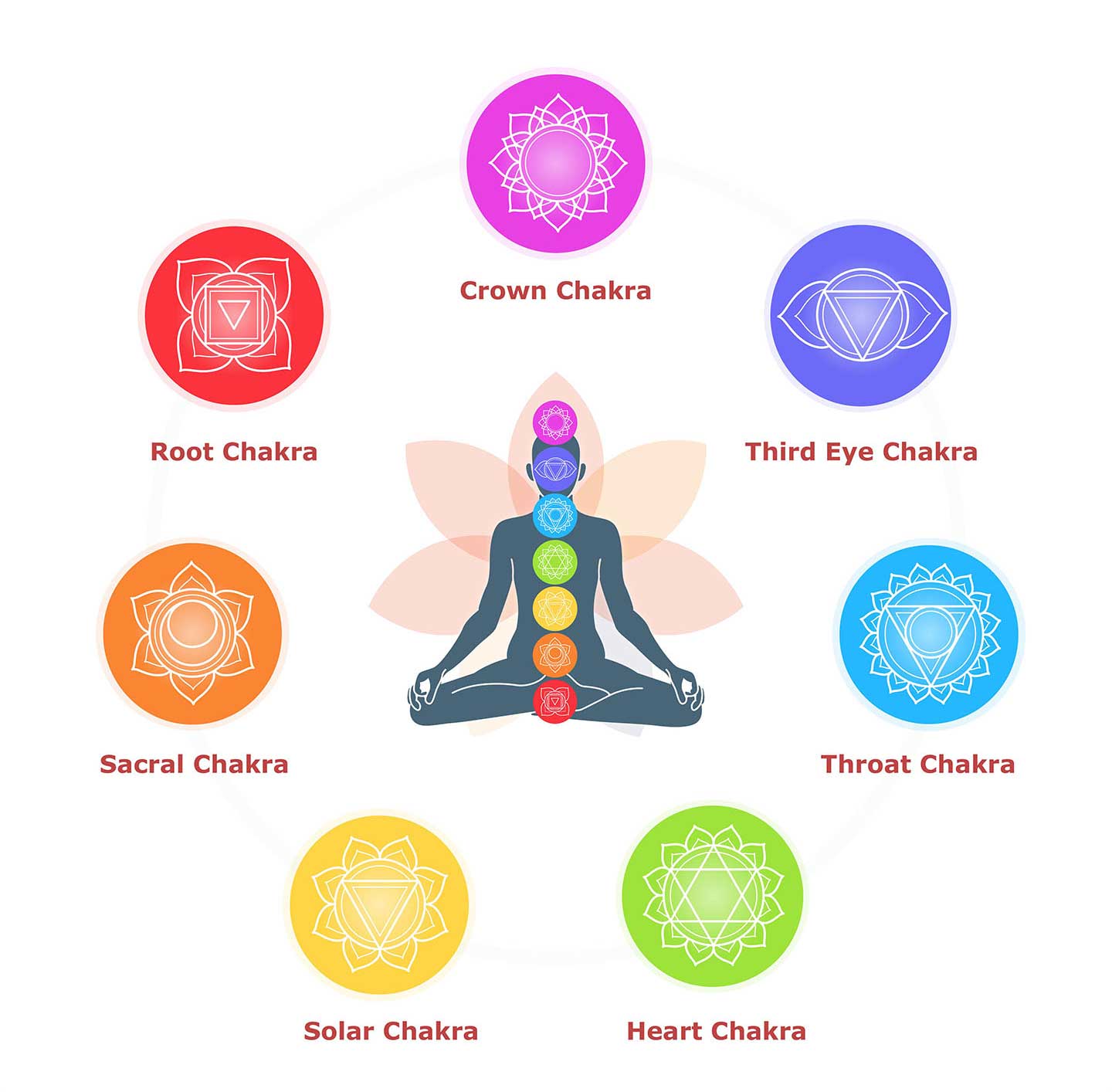
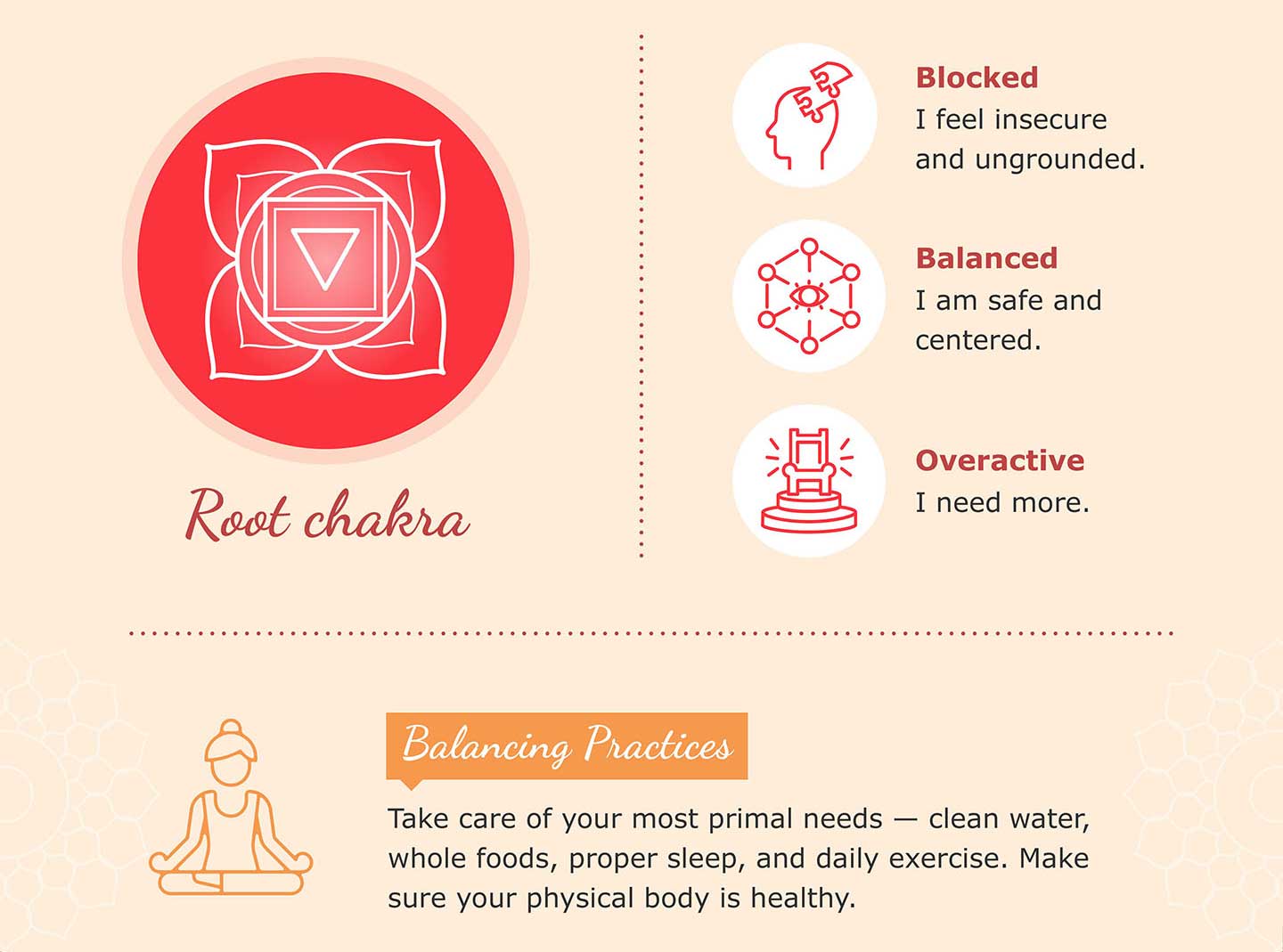
The Root Chakra, or Muladhara in Sanskrit, is located at the base of the spine and is associated with the color red and the element of Earth. It forms the energetic foundation for safety, security, and survival instincts. When this chakra is balanced, you experience a strong sense of grounding and trust, feeling safe and connected to the material world. But what happens when this crucial base is disrupted?
Recognizing Root Chakra Imbalances
Signs of an Underactive Root Chakra (Blocked): When the Root Chakra is underactive or blocked, feelings often center around insecurity, instability, and a lack of belonging. Individuals might express, "I feel insecure and ungrounded," or experience chronic financial worries, anxiety about basic needs, and a general sense of disconnection from their physical body. Physically, this can manifest as lower back pain, issues with legs or feet, and a weakened immune system. A hypothetical scenario: Imagine Sarah, who constantly worries about her job security and struggles to save money, even when she earns enough. Her persistent anxiety and feeling of being "adrift" often point to an imbalanced Muladhara.
Signs of an Overactive Root Chakra: An overactive Root Chakra can lead to an excessive focus on material possessions and survival, often manifesting as greed, attachment to the physical world, and resistance to change. Someone might think, "I need more," becoming overly materialistic, controlling, or aggressive. They might struggle with obesity or feel constantly restless. For example, Mark, who works excessively, hoards possessions, and becomes irate over minor inconveniences, might be experiencing an overactive Root Chakra, clinging to external stability.
Practices for Root Chakra Alignment and Opening
To effectively unblock and balance your Root Chakra, consider a multi-faceted approach:
Specific Yoga Poses for Grounding:
-
Mountain Pose (Tadasana): Stand tall, feet hip-width apart, distributing weight evenly. Focus on pressing all four corners of your feet into the ground, symbolizing deep roots.
-
Warrior I (Virabhadrasana I): A strong, foundational pose that builds stability and connection to the earth.
-
Child's Pose (Balasana): Helps calm the nervous system and creates a sense of safety and surrender.
Affirmations and Mantras:
-
The Sanskrit mantra for the Root Chakra is "Lam." Chanting this aloud or silently can help resonate with its energy.
-
Repeat affirmations such as: "I am safe and secure," "I am grounded and stable," "All my needs are met," or "I trust in the flow of life."
Lifestyle and Diet Tips:
-
Connect with Nature: Spend time outdoors, walk barefoot on grass or sand, or garden. This physical connection helps to re-ground your energy.
-
Nourishing Foods: Incorporate root vegetables (carrots, potatoes, beets), proteins, and red-colored foods into your diet.
-
Physical Activity: Regular exercise helps integrate the body and spirit, releasing stagnant energy.
-
Decluttering: Releasing material attachments can alleviate an overactive Root Chakra.
Crystals and Essential Oils:
-
Crystals: Red Jasper, Black Tourmaline, Hematite, and Garnet are known for their grounding properties. Keep them in your environment or carry them with you.
-
Essential Oils: Vetiver, Cedarwood, Patchouli, and Myrrh promote feelings of stability and security through aromatherapy.
A Psychic's Perspective on Your Root Chakra
From an intuitive standpoint, a psychic might perceive an imbalanced Root Chakra as a faint or erratic red glow, or a sense of "leakage" at the base. They might sense deep-seated fears or ancestral patterns influencing your current sense of security. An intuitive counselor could guide you through visualizations to strengthen your energetic roots, helping you to release generational anxieties and firmly establish your energetic anchor in the present. This often reveals valuable insights, allowing you to build resilience from the ground up.
Exploring the Sacral Chakra (Svadhisthana): The Hub of Creativity and Emotion
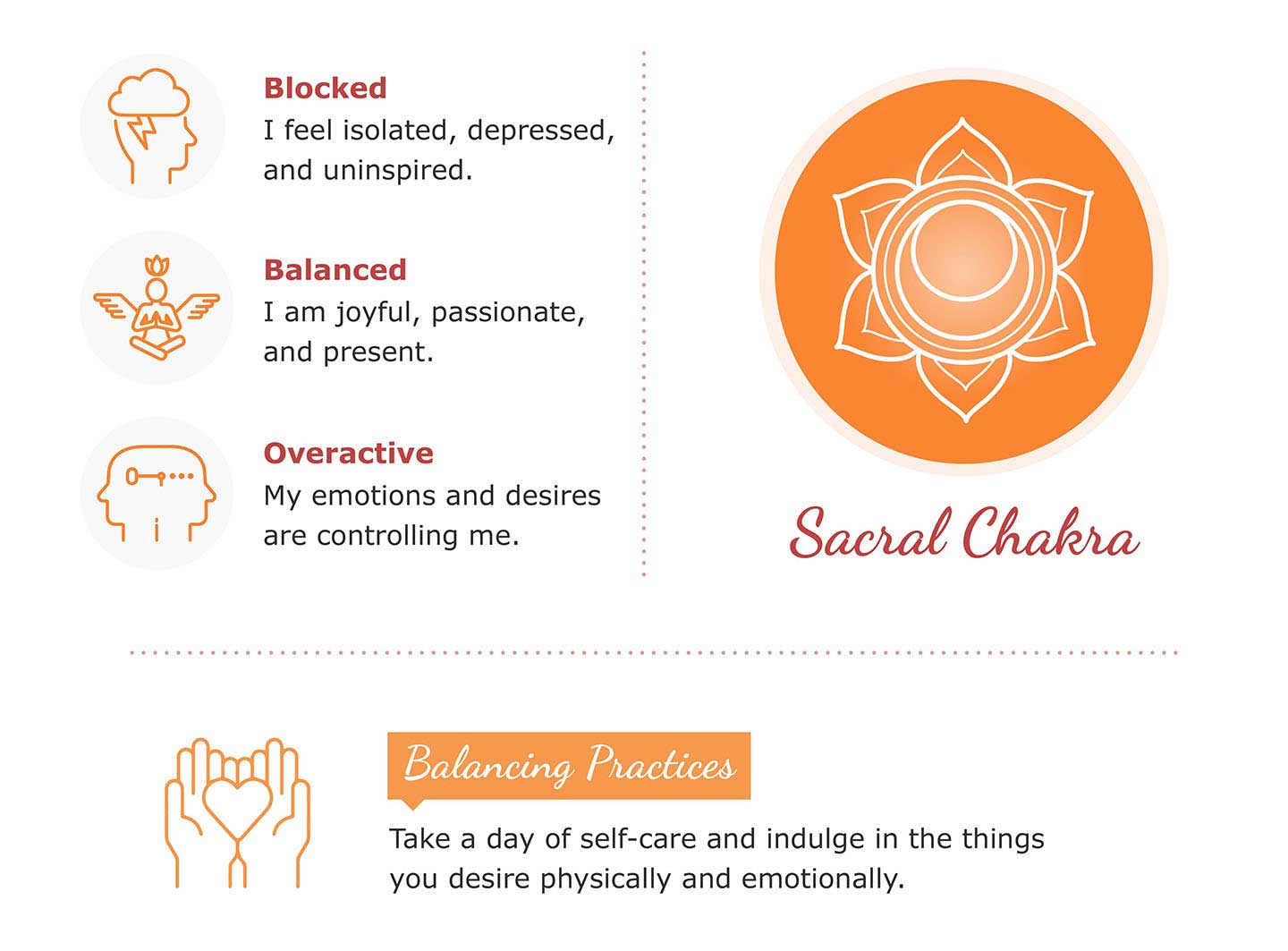
The Sacral Chakra, or Svadhisthana in Sanskrit, resides in the lower abdomen, encompassing the reproductive organs. Associated with the color orange and the element of Water, it governs creativity, emotions, sexuality, and pleasure. When balanced, this chakra allows for vibrant self-expression, healthy emotional flow, and a joyful approach to life. What might a disruption in this energy center feel like?
Recognizing Sacral Chakra Imbalances
Signs of an Underactive Sacral Chakra (Blocked): A blocked Sacral Chakra can manifest as emotional numbness, creative stagnation, and difficulty experiencing pleasure or intimacy. You might find yourself thinking, "I feel isolated, depressed, and uninspired," or experiencing a lack of passion and emotional rigidity. Physically, this can lead to reproductive issues, urinary problems, or lower back stiffness. Consider John, who feels perpetually "stuck" in a routine, struggles to connect emotionally with others, and finds no joy in his hobbies. His muted emotions and creative blocks often stem from an underactive Svadhisthana.
Signs of an Overactive Sacral Chakra: An overactive Sacral Chakra can lead to an excess of emotion and desire, manifesting as mood swings, addictive behaviors, unhealthy sexual compulsions, or being overly dramatic. Someone might declare, "My emotions and desires are controlling me," struggling with codependency or feeling overwhelmed by their passions. Maria, who cycles through intense relationships, uses retail therapy to cope with feelings, and has difficulty setting boundaries, could be experiencing an overactive Sacral Chakra, losing control to her emotional impulses.
Practices for Sacral Chakra Alignment and Opening
To unblock and balance your Sacral Chakra, explore practices that invite flow and emotional release:
Specific Yoga Poses for Flexibility and Flow:
-
Warrior II (Virabhadrasana II): Cultivates strength and openness in the hips and pelvis.
-
Hip Openers (Pigeon Pose, Baddha Konasana): Releases tension in the hips, an area often associated with stored emotions.
-
Cat-Cow Pose (Marjaryasana-Bitilasana): Connects breath with fluid movement through the spine, promoting energy flow.
Affirmations and Mantras:
-
The Sanskrit mantra for the Sacral Chakra is "Vam."
-
Repeat affirmations such as: "I embrace pleasure and creativity," "I flow with life," "I am worthy of joy and passion," or "I honor my emotions."
Lifestyle and Diet Tips:
-
Creative Pursuits: Engage in activities that ignite your passion, such as art, dancing, writing, or playing music.
-
Sensual Experiences: Indulge in healthy pleasures like warm baths, enjoying delicious food, or appreciating beautiful art.
-
Emotional Expression: Practice journaling or talk therapy to process emotions in a healthy way.
-
Nourishing Foods: Incorporate orange-colored fruits and vegetables (oranges, melons, carrots) and healthy fats into your diet.
Crystals and Essential Oils:
-
Crystals: Carnelian, Orange Calcite, Sunstone, and Moonstone support creativity, emotional balance, and intuition.
-
Essential Oils: Sandalwood, Ylang-Ylang, Orange, and Clary Sage can enhance emotional well-being and creativity through aromatherapy.
A Psychic's Perspective on Your Sacral Chakra
Intuitively, an imbalanced Sacral Chakra might appear as a murky or turbulent orange glow, indicating suppressed emotions or an overwhelming emotional state. A psychic might sense creative blocks or challenges in healthy self-expression. They could guide you through visualizations focused on fluid movement and emotional release, helping you to connect with your authentic desires and passions. This tends to be a critical turning point for embracing joy.
Harnessing the Solar Plexus Chakra (Manipura): Your Center of Power and Will
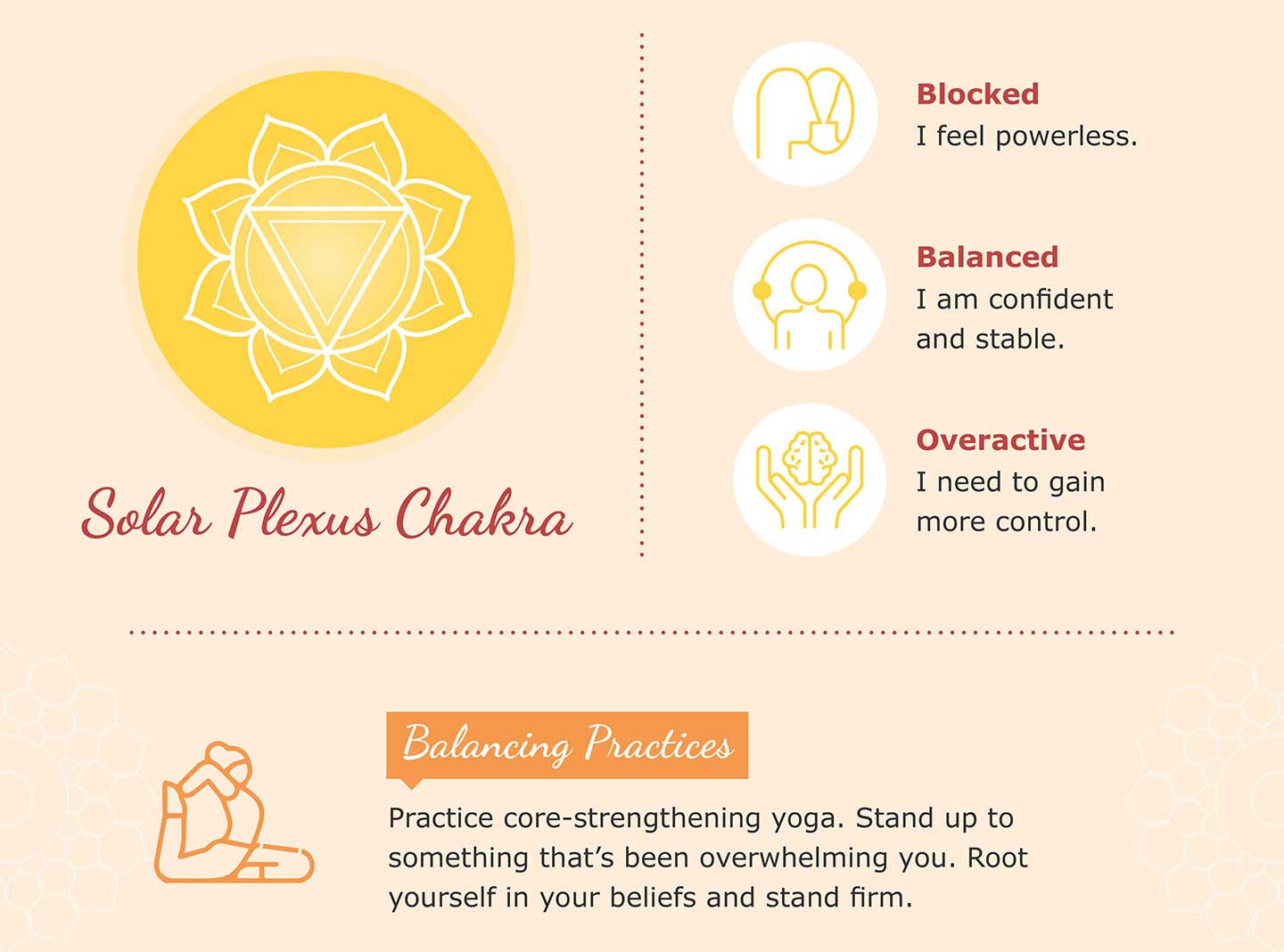
The Solar Plexus Chakra, or Manipura in Sanskrit, is located in the upper abdomen, between the navel and the sternum. Associated with the color yellow and the element of Fire, it governs personal power, self-esteem, willpower, and metabolism. When balanced, this chakra instills confidence, a strong sense of purpose, and the ability to manifest your intentions. What happens when this inner fire is too dim or too strong?
Recognizing Solar Plexus Chakra Imbalances
Signs of an Underactive Solar Plexus Chakra (Blocked): An underactive Manipura can lead to feelings of powerlessness, low self-esteem, and difficulty making decisions. You might often think, "I feel powerless," or experience chronic indecision, a lack of direction, and fear of rejection. Physically, this can manifest as digestive issues, fatigue, and stomach problems. Consider David, who frequently second-guesses his choices, struggles to assert himself at work, and often feels like others walk all over him. His lack of confidence and inability to take charge often point to a blocked Solar Plexus Chakra.
Signs of an Overactive Solar Plexus Chakra: An overactive Solar Plexus Chakra can lead to a need for dominance, aggression, and excessive control over others. Someone might exclaim, "I need to gain more control," becoming overly critical, judgmental, or prone to anger outbursts. They might also suffer from ulcers or burnout due to constant striving. For example, Lisa, who is a relentless perfectionist, micromanages everyone around her, and gets easily frustrated when things don't go her way, might be experiencing an overactive Manipura, struggling to release control.
Practices for Solar Plexus Chakra Alignment and Opening
To effectively unblock and balance your Solar Plexus Chakra, focus on strengthening your core and cultivating self-worth:
Specific Yoga Poses for Core Strength and Empowerment:
-
Boat Pose (Paripurna Navasana): Builds core strength and ignites inner fire, fostering a sense of capability.
-
Plank Pose (Phalakasana): Strengthens the entire body, particularly the core, promoting stability and resilience.
-
Sun Salutations (Surya Namaskar): A dynamic sequence that generates heat and energy, symbolizing the element of fire.
Affirmations and Mantras:
-
The Sanskrit mantra for the Solar Plexus Chakra is "Ram."
-
Repeat affirmations such as: "I am powerful and capable," "I direct my life with confidence," "I am worthy of success," or "I embrace my personal power."
Lifestyle and Diet Tips:
-
Set Boundaries: Learn to say no and protect your energy.
-
Take Decisive Action: Overcome procrastination by taking small, consistent steps toward your goals.
-
Engage in Healthy Competition: Participate in activities that challenge you in a positive way, building self-esteem.
-
Nourishing Foods: Incorporate yellow foods (corn, bananas, lemons) and complex carbohydrates into your diet.
Crystals and Essential Oils:
-
Crystals: Citrine, Tiger's Eye, Pyrite, and Yellow Jasper enhance confidence, willpower, and personal power.
-
Essential Oils: Lemon, Ginger, Lemongrass, and Rosemary can invigorate and uplift, promoting a sense of control and clarity through aromatherapy.
A Psychic's Perspective on Your Solar Plexus Chakra
Intuitively, a psychic might perceive an imbalanced Manipura as a dull or excessively bright yellow aura, indicating either a lack of personal power or an aggressive overcompensation. They might sense core beliefs around unworthiness or a constant struggle for control. An intuitive counselor could guide you through visualizations to ignite your inner fire, helping you to release past victimhood and embrace your authentic strength. This helps you stand firm in your beliefs.
Opening the Heart Chakra (Anahata): The Center of Love and Compassion
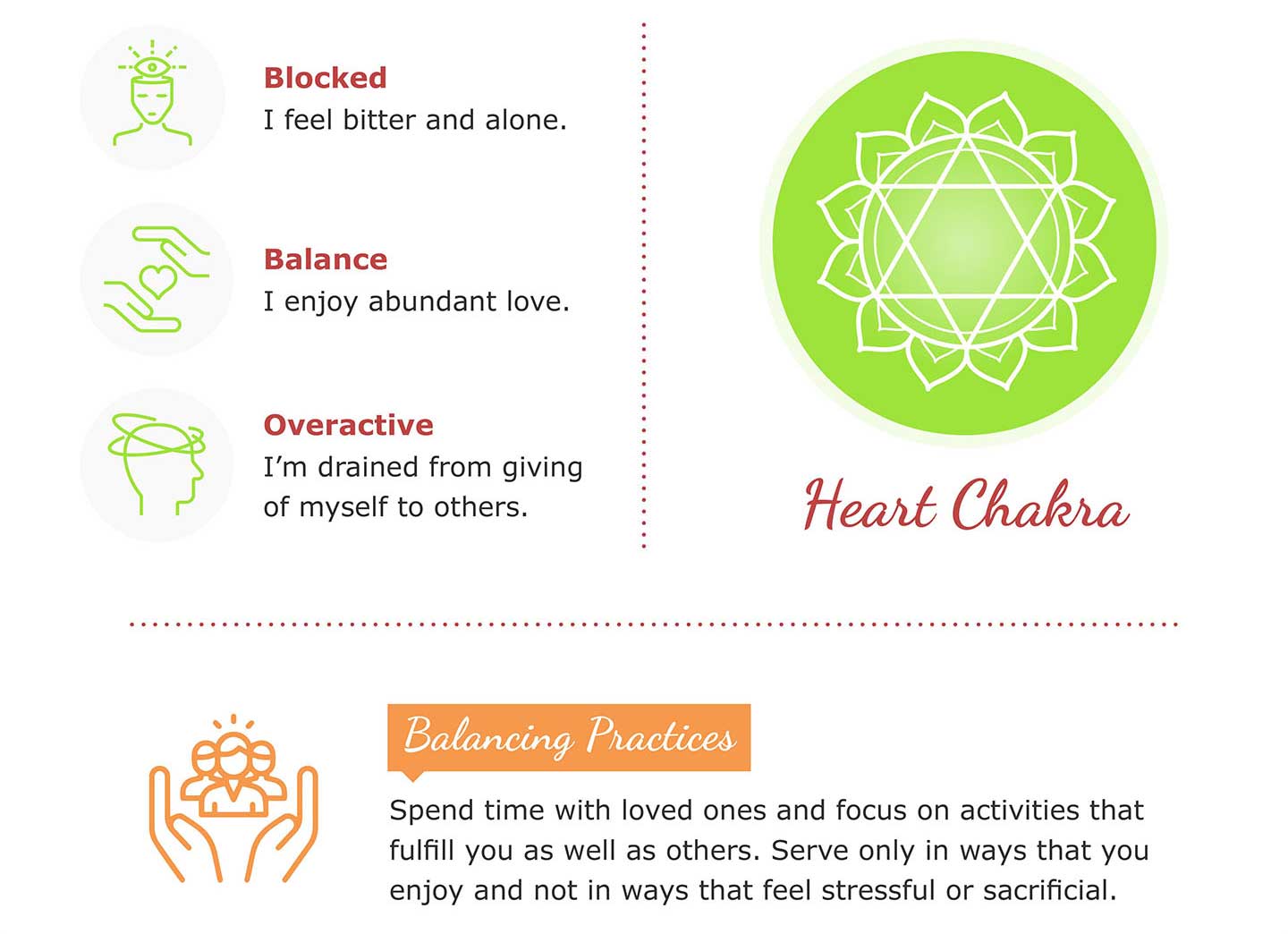
The Heart Chakra, or Anahata in Sanskrit, is located at the center of the chest, influencing the heart, lungs, and circulatory system. Associated with the color green (and sometimes pink) and the element of Air, it governs love, compassion, forgiveness, and connection. When balanced, this chakra allows for deep empathy, unconditional love, and healthy relationships. What might a disruption in this essential energy center feel like?
Recognizing Heart Chakra Imbalances
Signs of an Underactive Heart Chakra (Blocked): An underactive Anahata can lead to feelings of isolation, bitterness, and a fear of intimacy or commitment. You might think, "I feel bitter and alone," or struggle with trust, resentment, and an inability to forgive. Physically, this can manifest as heart problems, high blood pressure, or respiratory issues. Consider Emily, who avoids deep emotional connections, harbors old grievances, and finds it difficult to express affection. Her emotional guardedness and reluctance to open up often point to a blocked Heart Chakra.
Signs of an Overactive Heart Chakra: An overactive Heart Chakra can manifest as codependency, sacrificing personal needs for others, and unhealthy emotional boundaries. Someone might feel, "I'm drained from giving of myself to others," becoming overly empathetic, easily manipulated, or seeking external validation through caregiving. For example, Robert, who constantly puts everyone else's needs before his own, struggles to say no, and feels exhausted from emotional labor, might be experiencing an overactive Anahata, giving away too much of his vital energy.
Practices for Heart Chakra Alignment and Opening
To unblock and balance your Heart Chakra, cultivate practices that foster love, compassion, and healthy boundaries:
Specific Yoga Poses for Heart Opening:
-
Camel Pose (Ustrasana): A deep backbend that powerfully opens the chest and heart space.
-
Cobra Pose (Bhujangasana): Gently opens the front of the body, stimulating the Heart Chakra.
-
Fish Pose (Matsyasana): Lifts the chest and throat, promoting openness and vulnerability.
Affirmations and Mantras:
-
The Sanskrit mantra for the Heart Chakra is "Yam."
-
Repeat affirmations such as: "I am open to love," "I forgive myself and others," "I give and receive love effortlessly," or "My heart is open to compassion."
Lifestyle and Diet Tips:
-
Acts of Kindness: Engage in selfless service or small gestures of love toward others.
-
Connect with Nature: Spend time in green spaces, which resonate with the Heart Chakra's color.
-
Foster Healthy Relationships: Nurture connections that are reciprocal and supportive.
-
Practice Self-Love: Engage in activities that make you feel valued and cared for.
-
Nourishing Foods: Incorporate green foods (leafy greens, avocados, broccoli) and heart-healthy fats into your diet.
Crystals and Essential Oils:
-
Crystals: Rose Quartz, Green Aventurine, Emerald, and Rhodonite are known to attract and radiate love, healing emotional wounds.
-
Essential Oils: Rose, Geranium, Bergamot, and Ylang-Ylang promote feelings of love, compassion, and emotional balance through aromatherapy.
A Psychic's Perspective on Your Heart Chakra
Intuitively, an imbalanced Anahata might appear as a dull, constricted, or overly expansive green/pink light, revealing unresolved grief or an inability to set loving boundaries. A psychic might sense past heartbreaks or a tendency toward codependency. An intuitive counselor could guide you through visualizations of opening your heart, helping you to release emotional burdens and embrace both self-love and outward compassion. This often brings about abundant love.
Asserting Your Truth with the Throat Chakra (Vishuddha): The Center of Communication
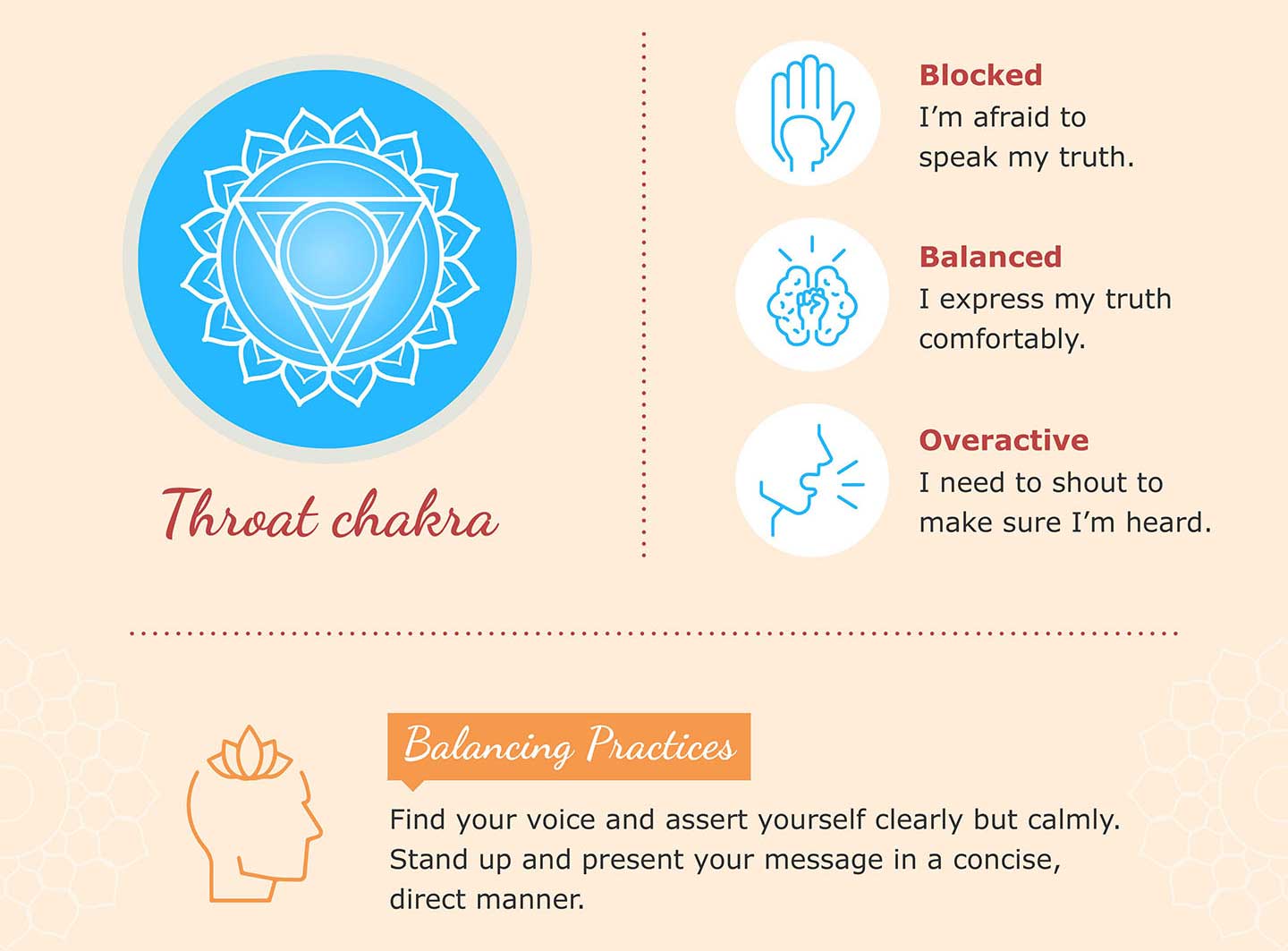
The Throat Chakra, or Vishuddha in Sanskrit, is located at the throat, governing communication, self-expression, and truth. Associated with the color blue and the element of Sound, it allows for clear articulation of thoughts and feelings. When balanced, this chakra empowers you to speak your truth with confidence and listen with empathy. What happens when your voice is stifled or overly dominant?
Recognizing Throat Chakra Imbalances
Signs of an Underactive Throat Chakra (Blocked): An underactive Vishuddha can lead to shyness, a fear of public speaking, and an inability to express your authentic self. You might frequently think, "I'm afraid to speak my truth," or experience difficulty asserting your needs, often feeling unheard. Physically, this can manifest as sore throats, thyroid issues, and neck pain. Consider Alex, who often stays silent in meetings, struggles to voice his opinions, and feels a constant lump in his throat when trying to express personal feelings. His suppressed voice often points to a blocked Throat Chakra.
Signs of an Overactive Throat Chakra: An overactive Throat Chakra can lead to excessive talking, gossiping, interrupting others, and speaking harshly without thought. Someone might think, "I need to shout to make sure I'm heard," becoming arrogant, dogmatic, or unable to listen. For example, Chloe, who dominates conversations, frequently criticizes others, and rarely allows anyone else to speak, might be experiencing an overactive Vishuddha, using her voice to control rather than communicate effectively.
Practices for Throat Chakra Alignment and Opening
To effectively unblock and balance your Throat Chakra, cultivate practices that encourage clear and authentic expression:
Specific Yoga Poses for Vocal Expression:
-
Fish Pose (Matsyasana): Opens the throat and chest, facilitating expression.
-
Shoulder Stand (Sarvangasana): Invigorates the throat and thyroid gland, promoting clear communication.
-
Neck Stretches: Gentle movements to release tension in the neck and jaw, areas often holding unexpressed words.
Affirmations and Mantras:
-
The Sanskrit mantra for the Throat Chakra is "Ham."
-
Repeat affirmations such as: "I express my truth comfortably," "My voice matters," "I speak my truth with clarity and confidence," or "I listen with an open heart."
Lifestyle and Diet Tips:
-
Journaling: A safe space to explore and articulate your thoughts and feelings.
-
Singing or Chanting: Actively using your voice in a joyful way can help open the throat.
-
Mindful Communication: Practice active listening and speak thoughtfully, not just reactively.
-
Nourishing Foods: Incorporate blue foods (blueberries) and plenty of water into your diet, and consider herbal teas for throat soothing.
Crystals and Essential Oils:
-
Crystals: Lapis Lazuli, Sodalite, Turquoise, and Blue Lace Agate are known to enhance communication and self-expression.
-
Essential Oils: Peppermint, Eucalyptus, Frankincense, and Blue Tansy can clear the airways and promote clarity of speech through aromatherapy.
A Psychic's Perspective on Your Throat Chakra
Intuitively, an imbalanced Vishuddha might appear as a constricted or overly vibrant blue aura, indicating either a suppression of truth or a tendency to dominate conversations. A psychic might sense unspoken words, fears of judgment, or a lack of authentic self-expression. An intuitive counselor could guide you through vocal exercises or visualizations to empower your voice, helping you to speak your truth clearly and confidently. This is where things become especially interesting for finding your voice.
Awakening the Third Eye Chakra (Ajna): Your Gateway to Intuition
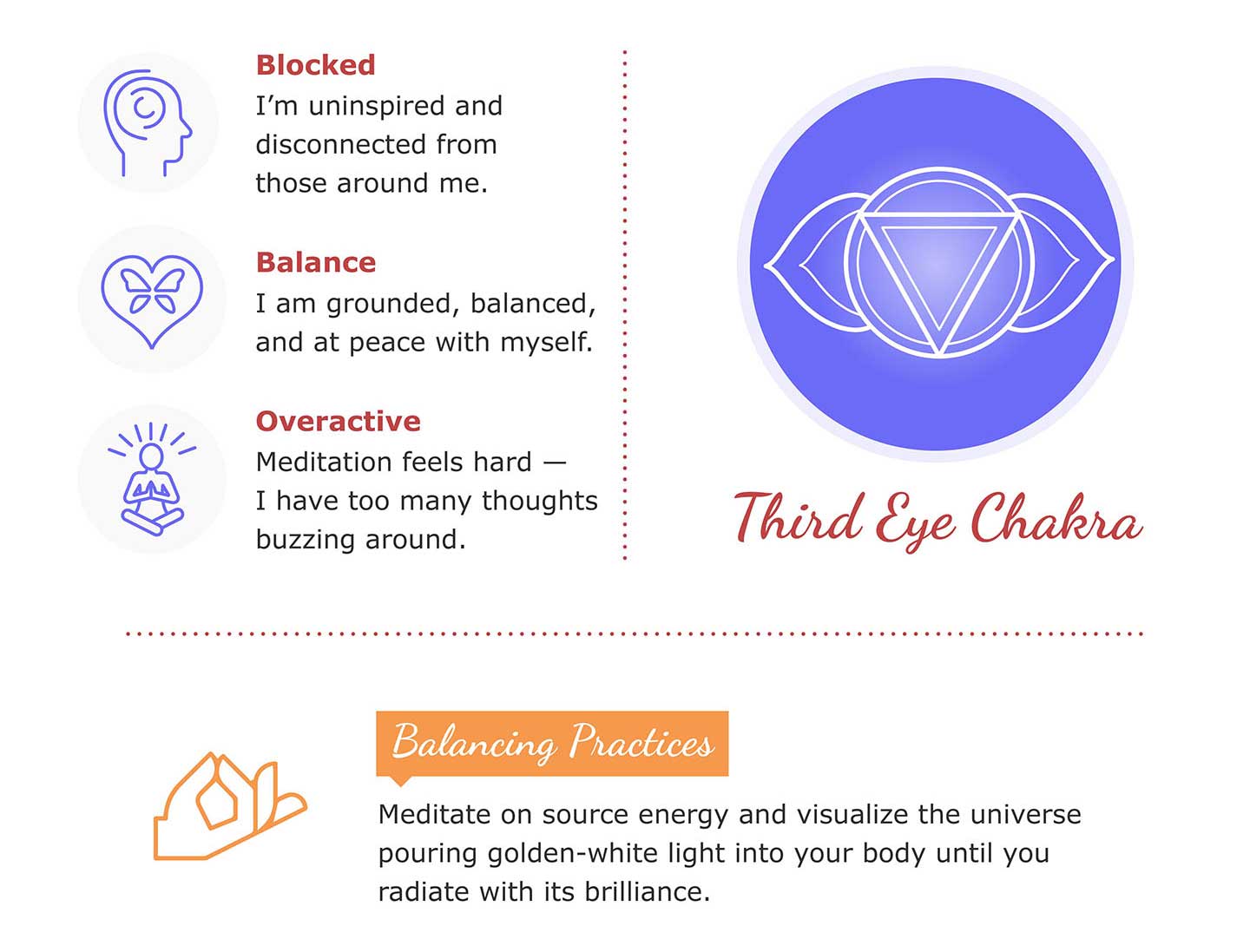
The Third Eye Chakra, or Ajna in Sanskrit, is located between the eyebrows, governing intuition, perception, and inner wisdom. Associated with the color indigo and the element of Light, it is the center of psychic abilities and higher consciousness. When balanced, this chakra brings mental clarity, strong intuition, and vivid imagination. What happens when your inner vision is clouded or overstimulated?
Recognizing Third Eye Chakra Imbalances
Signs of an Underactive Third Eye Chakra (Blocked): An underactive Ajna can lead to a lack of intuition, indecision, and difficulty visualizing. You might think, "I'm uninspired and disconnected from those around me," or struggle with a lack of purpose, skepticism, and poor memory. Physically, this can manifest as headaches, eye strain, or sinus problems. Consider Daniel, who relies solely on logic, struggles to trust his gut feelings, and finds it hard to imagine future possibilities. His limited perspective often points to a blocked Third Eye Chakra.
Signs of an Overactive Third Eye Chakra: An overactive Third Eye Chakra can lead to an excess of spiritual experiences without grounding, causing vivid nightmares, hallucinations, or a detachment from reality. Someone might think, "Meditation feels hard, I have too many thoughts buzzing around," becoming spiritually arrogant, prone to delusions, or experiencing anxiety from psychic overload. For example, Sophia, who experiences frequent, overwhelming visions, struggles to discern reality from imagination, and feels ungrounded by her spiritual experiences, might be experiencing an overactive Ajna.
Practices for Third Eye Chakra Alignment and Opening
To effectively unblock and balance your Third Eye Chakra, focus on cultivating intuition and inner clarity:
Specific Yoga Poses for Inner Vision:
-
Child's Pose (Balasana): Resting the forehead on the ground can stimulate the Third Eye.
-
Dolphin Pose (Ardha Pincha Mayurasana): Strengthens the core while bringing blood flow to the head, stimulating higher thought.
-
Headstand (Salamba Sirsasana): (Advanced pose) Reverses blood flow, stimulating the pineal gland associated with the Third Eye.
Affirmations and Mantras:
-
The Sanskrit mantra for the Third Eye Chakra is "Om."
-
Repeat affirmations such as: "I trust my intuition," "I see clearly," "I am connected to divine wisdom," or "My inner vision is strong and clear."
Lifestyle and Diet Tips:
-
Meditation and Visualization: Regularly practice quiet meditation, focusing on a spot between your eyebrows. Visualize golden-white light entering this area.
-
Dream Journaling: Record your dreams to enhance your intuitive connection.
-
Quiet Contemplation: Spend time in solitude to listen to your inner voice.
-
Nourishing Foods: Incorporate indigo/purple foods (eggplant, purple grapes, blueberries) into your diet.
Crystals and Essential Oils:
-
Crystals: Amethyst, Lapis Lazuli, Sodalite, and Fluorite are known to awaken intuition, enhance psychic abilities, and promote mental clarity.
-
Essential Oils: Frankincense, Sandalwood, Juniper, and Clary Sage can deepen meditation and stimulate inner vision through aromatherapy.
A Psychic's Perspective on Your Third Eye Chakra
Intuitively, an imbalanced Ajna might appear as a cloudy or pulsating indigo light, indicating either a lack of intuitive trust or an overwhelming influx of information. A psychic might sense blockages in your intuitive flow or an over-reliance on external validation. An intuitive counselor could guide you through visualizations to gently open your inner vision, helping you to discern and trust your innate psychic insights while remaining grounded. This can lead to being more balanced and at peace.
Connecting with the Crown Chakra (Sahasrara): Your Link to Divine Consciousness
The Crown Chakra, or Sahasrara in Sanskrit, is located at the very top of the head. Associated with the color violet (or white) and the element of Thought (or pure consciousness), it is your gateway to universal consciousness, spiritual enlightenment, and divine wisdom. When balanced, this chakra allows for a deep sense of interconnectedness, spiritual understanding, and a profound sense of peace. What happens when your connection to the divine is interrupted or overwhelming?
Recognizing Crown Chakra Imbalances
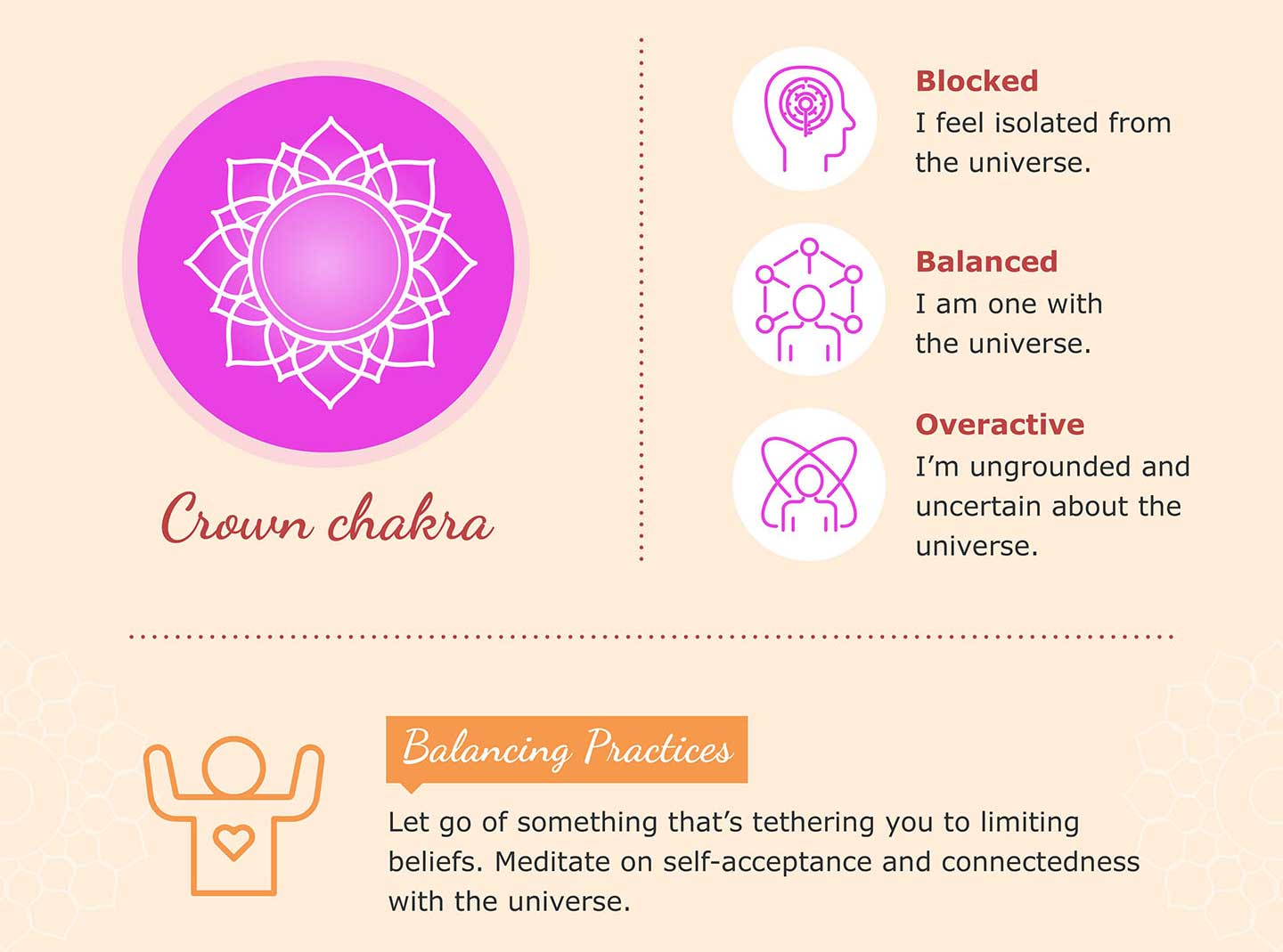
Signs of an Underactive Crown Chakra (Blocked): An underactive Sahasrara can lead to feelings of isolation, spiritual cynicism, and a lack of purpose. You might think, "I feel isolated from the universe," or struggle with a sense of meaninglessness, depression, and a rigid belief system. Physically, this can manifest as chronic headaches, neurological disorders, and extreme fatigue. Consider Sarah, who feels disconnected from any spiritual path, struggles to find meaning in life, and often feels a sense of existential loneliness. Her spiritual detachment often points to a blocked Crown Chakra.
Signs of an Overactive Crown Chakra: An overactive Crown Chakra can lead to a disconnection from the physical body, spiritual bypassing (avoiding emotional work through spiritual concepts), and an overly intellectual approach to spirituality. Someone might think, "I'm ungrounded and uncertain about the universe," becoming overly analytical, dissociating from their emotions, or experiencing spiritual arrogance. For example, Thomas, who spends all his time meditating but struggles with everyday tasks, dismisses material concerns, and intellectualizes all his feelings, might be experiencing an overactive Sahasrara, finding it hard to integrate his spiritual experiences with earthly life.
Practices for Crown Chakra Alignment and Opening
To effectively unblock and balance your Crown Chakra, cultivate practices that foster spiritual connection and inner peace:
Specific Yoga Poses for Spiritual Connection:
-
Lotus Pose (Padmasana): A traditional meditative posture that facilitates deep contemplation and spiritual connection.
-
Headstand (Salamba Sirsasana): (Advanced pose) Stimulates the Crown Chakra by inverting the body, bringing energy to the crown.
-
Savasana (Corpse Pose): Allows for complete relaxation and integration of energy, promoting a sense of oneness.
Affirmations and Mantras:
-
The Sanskrit mantra for the Crown Chakra is "Aum" or "Om."
-
Repeat affirmations such as: "I am one with the universe," "I am connected to universal wisdom," "I am guided by higher purpose," or "I embrace divine guidance."
Lifestyle and Diet Tips:
-
Meditation and Prayer: Regular practice helps to quiet the mind and connect with higher consciousness.
-
Selfless Service: Engaging in acts of compassion and service for others can deepen your spiritual connection.
-
Quiet Reflection: Spend time in silence, allowing for contemplation and inner wisdom to emerge.
-
Nourishing Foods: Incorporate light, purifying foods; fasting or mindful eating practices are often associated with this chakra.
Crystals and Essential Oils:
-
Crystals: Clear Quartz, Amethyst, Selenite, and Apophyllite are known to enhance spiritual connection, promote clarity, and facilitate higher guidance.
-
Essential Oils: Lavender, Frankincense, Sandalwood, and Myrrh can deepen meditation, promote relaxation, and facilitate spiritual insight through aromatherapy.
A Psychic's Perspective on Your Crown Chakra
Intuitively, an imbalanced Sahasrara might appear as a faint, disconnected, or overly intense violet/white light, indicating spiritual isolation or an inability to integrate spiritual experiences with daily life. A psychic might sense a lack of purpose or an overwhelming influx of spiritual information without proper grounding. An intuitive counselor could guide you through visualizations to deepen your spiritual connection, helping you to find profound peace and a clear sense of your place in the universe.
Your Journey to Energetic Harmony: Final Thoughts
If you take one thing from this comprehensive guide, remember that chakra alignment is an empowering, continuous journey toward self-discovery and holistic well-being. Regularly checking in with your energy centers through practices like meditation and visualization helps ensure your chakras remain clear, vibrant, and fully functional. The great news is that even small, consistent efforts can lead to profound shifts in your energetic state. This is where it gets exciting: you have the power to influence your own balance and vitality.
When to Seek Professional Guidance for Chakra Healing
For those navigating persistent or severe imbalances, engaging with a professional can be incredibly transformative. A skilled psychic, energy worker, or intuitive counselor can offer personalized insights and specialized techniques to help you effectively unblock and realign your energy. For instance, a Reiki practitioner might use hands-on healing to channel universal life force energy, while an intuitive might offer guidance on releasing specific emotional patterns tied to chakra blockages. Many individuals find that a few sessions with a reputable energy expert can jumpstart their healing process, offering a clearer path to restoring balance in their body, mind, and spirit. Remember, you're not alone in this journey, and expert support is readily available.
For personalized guidance on your path to chakra alignment, consider connecting with a trusted intuitive. Explore their profiles and find the right match for your energetic needs.
Questions People Ask Most
What does it mean to have chakra alignment?
Chakra alignment refers to the state where your seven main energy centers are open, balanced, and functioning optimally, allowing life force energy to flow freely for overall well-being.
How long does it take to balance your chakras?
Balancing your chakras is an ongoing practice, not a one-time fix. Consistency in practices like meditation, yoga, and mindful living can bring noticeable shifts over weeks or months, but continued attention helps maintain harmony.
Can an energy worker help with chakra imbalances?
Yes, energy workers, psychics, and intuitive counselors specialize in sensing and realigning energetic imbalances. They can use modalities like Reiki, guided visualizations, or intuitive insights to help restore equilibrium to your chakra system.
What are the common signs of a blocked chakra?
Common signs of a blocked chakra vary but often include specific physical discomforts, emotional struggles, like anxiety or lack of creativity, and mental patterns, such as indecision or a feeling of being ungrounded, related to that chakra's area of influence.
Are there simple daily habits for chakra health?
Absolutely. Incorporating simple habits like mindful breathing, spending time in nature, eating nourishing whole foods, practicing affirmations, and engaging in gentle movement like yoga can significantly support daily chakra health.
