
What Color Is My Aura? Take the Quiz to Find Out
Date 8/13/2026
An aura, in metaphysical belief, is the subtle field of energy said to surround a living person and to shift with mood, personality, and spiritual state. The colors people report seeing in it, red, orange, yellow, green, blue, indigo, violet, pink, white, and gray, are each tied to traditional meanings. To find what color your aura might be, this page offers a short quiz that reads your traits and current mood and suggests a likely color. It matters because color is a gentle mirror for self-reflection, and this is a spiritual belief, not established science.
I've read energy for people for the better part of two decades, and one of the first questions a new caller asks me is some version of "what color is my aura?" It's a good question, and the quiz on this page is built to give you a warm, honest starting answer by looking at how you tend to feel and act. In my experience, folks come in half-curious and half-skeptical, which is exactly the right way to come. In this article I'll walk you through what an aura is supposed to be, what each color traditionally means, how sensitives claim to see the field, what the quiz above is actually doing behind the scenes, and how to read your result without taking it too seriously or too lightly.
So what is an aura, really?
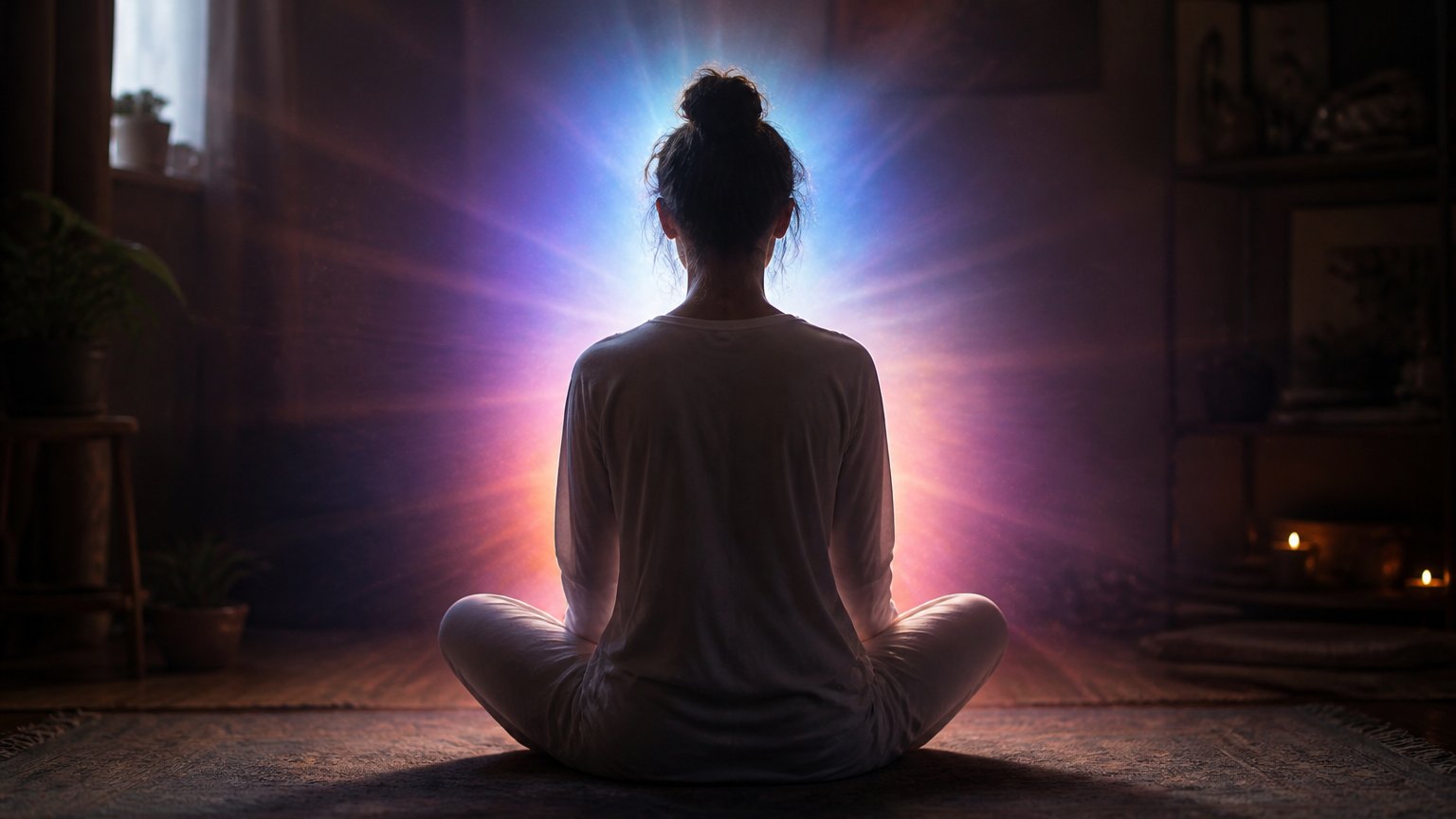
Picture the halos painted around saints in old church art, or the glow certain traditions describe around the Buddha. That's the idea in its simplest form. In metaphysical and spiritual belief, your aura is a luminous energy field that wraps around your body and reflects your emotional, mental, and spiritual condition. Practitioners often describe it as having layers, one closer to the physical body, others further out tied to feeling and thought, and many connect those layers to the chakra system carried down through Hindu and Buddhist practice.
The concept is old. Ancient Egypt, India, and Greece all left references to some kind of light or energy around the human form, usually wrapped up in ideas about the soul or the divine. So this isn't a modern invention. What I want to be straight with you about, though, is the science. Mainstream research has not found any measurable energy field that matches these descriptions, and the wider scientific community files auras under pseudoscience. Some researchers have floated ordinary explanations for what aura-seers report, things like afterimages on the retina or the brain filling in edges of vision. That doesn't have to spoil anything. It just means we treat aura color the way we'd treat a tarot card or a birth chart: as tradition and a tool for reflection, for adults who enjoy that kind of thing, and never as a medical or scientific reading of your body.
What does each aura color mean?
This is the part most people are here for, and honestly it's my favorite bit too. Below is the landmark table I keep coming back to. These are the meanings most widely shared across sources, though you'll notice traditions disagree here and there. I'll flag one big disagreement right after.
| Aura color | Commonly attributed meaning | Traits or mood often linked to it |
|---|---|---|
| Red | Passion, vitality, raw energy | Driven, bold, physically alive, sometimes quick to anger |
| Orange | Creativity and sociability | Adventurous, warm with people, playful |
| Yellow | Intellect, optimism, joy | Cheerful, curious, analytical, light-hearted |
| Green | Balance, growth, compassion | Nurturing, steady, drawn to healing and nature |
| Blue | Calm, communication, truth | Trustworthy, honest, a natural listener |
| Indigo | Intuition and deep perception | Introspective, sensitive to unspoken things |
| Violet or purple | Spiritual awareness and imagination | Visionary, dreamy, tuned to the unseen |
| Pink | Love, kindness, affection | Gentle, caring, generous with the heart |
| White | Purity and higher consciousness | Rare, said to signal a very open, transcendent state |
| Black or gray | Blocked or heavy energy | Guarded, worn down, or working through something |
Now, the disagreement I promised. Plenty of guides read black as flat-out negative, tied to depression or illness. Other traditions read it as protective, a shield someone has pulled up on purpose while they heal. When my caller's result comes back gray or black, that's the reading I lean toward, because in my experience people carrying that shade are usually not "bad." They're tired, or they've been protecting a soft heart. Big difference. If you want to go deeper on how these fields and colors are understood, the material on the aura and its layers is a good next stop.
How do people claim to actually see an aura?
Aura-seers I've met don't stare hard. Just the opposite. The most common method is soft focus: you look at a person standing against a plain, neutral wall, then let your gaze go loose and slightly past them, the way you'd unfocus your eyes at one of those old Magic Eye posters. Others rely on peripheral vision, catching the color at the edge of sight where it's said to show up more easily. And a fair number of readers describe sensing color rather than literally seeing it, more of a felt impression than a picture.
Does everyone see the same thing? No, and that's worth sitting with. Two sensitives can look at the same person and name different colors. For some that's proof auras are subjective. For others it just means the field shifts moment to moment and each reader catches a different slice. I lean toward the second, though I hold it loosely. Practice is the thread that runs through every account. People who report seeing auras almost always say it took months of quiet attention before anything showed up, which is honestly true of most intuitive skills. If sensing energy pulls at you, the broader world of energy healing is where a lot of that practice lives.
What is the aura quiz above actually doing?
Let me pull back the curtain, because I think you deserve to know. The quiz on this page does not scan your body or photograph light around you. What it does is smart in a simpler way. It asks about your temperament and your current mood, how you recharge, how you handle conflict, what you're drawn to, where your head's been lately, and it maps those answers onto the traditional color meanings in the table above.
Put simply, if your answers cluster around calm, honesty, and a love of listening, the quiz nudges toward blue. If they cluster around drive and physical energy, it leans red. It's inference, not measurement. And that's a genuinely useful thing, because the color meanings were built around personality and mood in the first place. So a quiz reading your personality is working with the exact same raw material a reader would, just from a different door. The great news is you can take it as many times as you like and watch the result move with your week.
Do aura colors change, or is yours fixed for life?
They change. This trips people up more than almost anything else, so let me be plain about it. Most traditions hold that your aura has a base tone, a background color that reflects who you fundamentally are, and then flashes and layers of other colors that come and go with what's happening in your life right now. Stressful month? A muddy gray might wash over an otherwise green field. Fell in love in the spring? Don't be surprised if pink shows up over everything.
So auras layer. A person can read as "green with a lot of yellow lately," and both parts are true at once, the steady nature and the passing mood. This is why I tell callers not to get too attached to a single answer. Here's another way to look at it: your aura color is less like your eye color, which is set, and more like your complexion, which flushes and pales with what you're feeling and doing. When your quiz result surprises you, that surprise is often the most useful part. It's showing you a mood you hadn't named yet.
How should you take the quiz and read your result?
Take it when you have a quiet minute and can answer honestly, not how you wish you were on a good day, but how you've actually been this week. That candor is the whole ballgame. If you rush it or answer aspirationally, you'll get a portrait of your fantasy self, which is fun but less useful than the real one.
When your color comes back, do three things with it. First, read the meaning and simply notice whether it lands. Does "calm and communicative" feel like you right now, or does it feel off? Both reactions teach you something. Second, look at the traits listed and ask where they show up in an ordinary day. Third, if a second color hovers close behind your main one, pay attention to it, that's often the passing layer, the mood riding on top of your base. What I tell people is to treat the result as a conversation starter with yourself, not a verdict handed down from on high.
How accurate is an aura color quiz?
Straight answer: it's accurate as a mirror, not as a measurement. The quiz can't verify a field of energy because, as I said up top, science hasn't found one to verify. What it can do reliably is reflect the answers you gave back to you through the lens of a very old symbolic language. When people tell me the result nailed them, what usually happened is the quiz gave language to something they already sensed about themselves.
You're not alone if part of you wants it to be more than that. I get it. But I'd rather you have the honest version, because the honest version still has real value. Reflection changes people. Sitting with "why does calm feel true for me right now, and did it feel true six months ago?" is worth something whether or not any glow exists around your shoulders. Keep it in the right box, though: this is for insight and entertainment, for grown-ups, and it's never a substitute for advice from a doctor, a counselor, a lawyer, or anyone qualified to help with a real problem in your life.
What should you actually do with your aura color?
Once you've got your color, the point isn't to frame it and hang it on the wall. The point is to use it as a small, gentle prompt. A few ways I've seen people put a result to work, without turning it into a rulebook:
- Use it as a check-in. If you routinely read as blue and this week you came out gray, that's a nudge to ask what's been weighing on you.
- Let it soften self-judgment. A "black or gray" result isn't a failing grade, it often means you've been shielding a tender part of yourself, and that's allowed.
- Retake it across a season and watch the pattern. The movement tells you more than any single snapshot.
- Share it with someone who knows you and ask if they see it too. Their read is its own kind of mirror.
And if the quiz leaves you wanting a real back-and-forth about what your energy is doing, that's exactly the moment to talk with a person. What I'm seeing lately in 2026 is more folks starting with a quiz like this one and then bringing their result to a live reading to dig into it. One of our psychic advisors can sit with your specific situation in a way no automated quiz ever will.
Questions I Get Asked Most
Can I really find out my aura color from a quiz?
A quiz can suggest a likely color, but it does so by reading your personality and current mood, not by measuring any energy field. Since the traditional color meanings were built around traits and feelings in the first place, a quiz that reads those traits is working with the same raw material a sensitive would. Take it as a thoughtful starting point and a mirror for self-reflection, offered for insight and entertainment, rather than as a scientific measurement of something around your body.
What is the rarest aura color?
In most traditions white is considered the rarest, since it's said to signal a very open, transcendent, highly spiritual state that few people hold for long. Some readers also treat a clear, luminous violet as uncommon for similar reasons. That said, rarity here is a belief inside a symbolic system, not a fact anyone can verify. I'd gently steer you away from chasing a "special" color. The most useful reading is simply the one that honestly reflects where you are right now.
Does my aura color change over time?
Yes, in most traditions it does. The common belief is that you have a base color reflecting your core nature, with other colors flashing and layering over it as your circumstances and moods shift. A stressful stretch might wash gray over an otherwise green field, and a joyful one might bring in pink. That's exactly why retaking the quiz over weeks or seasons can be revealing. The changes you notice often say more about you than any single result on its own.
Is a dark or black aura a bad sign?
Not necessarily. Some guides read black as heavy, blocked, or low energy, but plenty of traditions read it as protective, a shield someone has raised on purpose while they heal or guard a tender heart. In my experience a dark result usually points to tiredness or self-protection, not something sinister. Treat it as an invitation to be kind to yourself and ask what you've been carrying. It is never a diagnosis, and it's no substitute for real support from people qualified to help.
The last thing I'll leave you with
Here's what matters most: the color the quiz above gives you is a mirror, not a verdict, and mirrors are useful precisely because they show you what you might have missed. Take your result, sit with it for a minute, and let it start a kinder conversation with yourself about how you've really been. Whether you read as steady green, curious yellow, or a guarded gray that's just asking for some rest, there's no wrong color to be. Come back and take it again next month. I think you'll be glad you kept looking.
