
Secure Attachment in Babies: Signs and How to Build It
Date 11/11/2026
Secure attachment in babies is a trusting bond formed when a caregiver responds warmly and consistently to an infant's needs. A securely attached baby seeks comfort when upset and settles once soothed, prefers familiar caregivers, and uses a trusted adult as a base for exploring the world. It develops through everyday responsive care rather than perfect parenting. This early security supports emotional regulation, confidence, and the capacity to form healthy relationships throughout childhood and later life.
If you have ever cradled a crying baby at 3 a.m. and wondered whether you are getting any of this right, I want to start by saying something reassuring. The bond you are building is not a test you pass or fail on any single night. Secure attachment grows out of thousands of small, ordinary moments of care, and most parents give their babies far more of those than they realize. In this article I will walk you through what a secure attachment baby actually looks like, the signs to watch for in infants and toddlers, how you build that security day to day, and the tired old myths that deserve to be put to rest.
What is secure attachment in babies?
Secure attachment is the deep, dependable trust a baby develops in a caregiver who shows up reliably. The idea comes from attachment theory, first shaped by John Bowlby and later expanded by Mary Ainsworth through her well known "Strange Situation" study. Ainsworth described two things a trusted caregiver provides. One is a safe haven, the person a child returns to for comfort when the world feels scary. The other is a secure base, the steady presence a child launches from to explore, knowing someone will be there when they come back.
When we talk about secure attachment in infants, we are really describing a relationship, not a personality trait the baby is born with. It is the felt sense that "when I need my person, my person comes." That expectation, built over time, becomes the emotional foundation your child carries forward.
How does secure attachment form in the first year?
Attachment is not switched on at birth. It unfolds in stages across the first year and beyond. In the earliest months, babies show what researchers call indiscriminate attachment, meaning they respond warmly to almost anyone who feeds and holds them. They are wired to seek closeness, but they are not yet playing favorites.
Somewhere around 7 to 9 months, that changes. Babies start forming specific attachments and clearly prefer their primary caregivers. This is also when separation anxiety and wariness of strangers often appear. If your once easygoing baby suddenly cries when you leave the room or buries their face when a friendly neighbor leans in, take heart. That protest is not a problem. It is a sign that a real, particular bond has formed, and that your baby knows exactly who their people are.
What are the signs of secure attachment in babies?
The signs of secure attachment in babies are quieter than you might expect. You will not see a dramatic milestone. Instead you notice a pattern over time, a baby who trusts that comfort is coming. Here are the landmark signs to watch for, grouped by what they tell you about the bond.
| What you notice | What it signals |
|---|---|
| Seeks you out when upset and calms once held | Trust that you are a reliable source of comfort |
| Settles to your familiar voice, smell, or touch | Recognition of you as a safe haven |
| Prefers primary caregivers over strangers | A specific bond has formed |
| Makes eye contact, smiles, and babbles back at you | Healthy back-and-forth connection |
| Relaxes and can be soothed rather than staying frantic | Growing emotional regulation with your help |
Notice that none of these require a calm, easy baby. A baby who cries hard and then melts into your shoulder is showing secure attachment beautifully. The security is in the recovery, in the fact that your presence works.
What are the signs of secure attachment in toddlers?
As your child grows, the signs of secure attachment in toddlers shift toward exploration and reunion. A securely attached toddler will wander off to play, then glance back or toddle over to check in with you, using you as that secure base I mentioned. They venture out because they trust the anchor is holding.
You also see it in how they handle separation and reunion. Some protest when you leave is completely normal and healthy. What matters is the reunion. A securely attached toddler is genuinely comforted when you return, settles fairly quickly, and gets back to their day. When something confuses or frightens them, they turn toward you rather than away. Here are common signs of secure attachment in toddlers to look for:
- Explores a new space but keeps returning to touch base with you
- Shows some upset at separation and real relief at reunion
- Brings you toys, discoveries, and bumped knees to share
- Accepts comfort and calms down when you offer it
- Looks to your face to gauge whether a new situation is safe
Why do babies use you as a "secure base"?
The secure base is one of the most useful ideas in all of attachment theory, and it explains a paradox many parents feel. The more reliably you comfort a baby, the more independent they become. A child who knows the anchor is steady feels free to sail further out. A child who is unsure whether comfort is coming spends energy monitoring the caregiver instead of exploring.
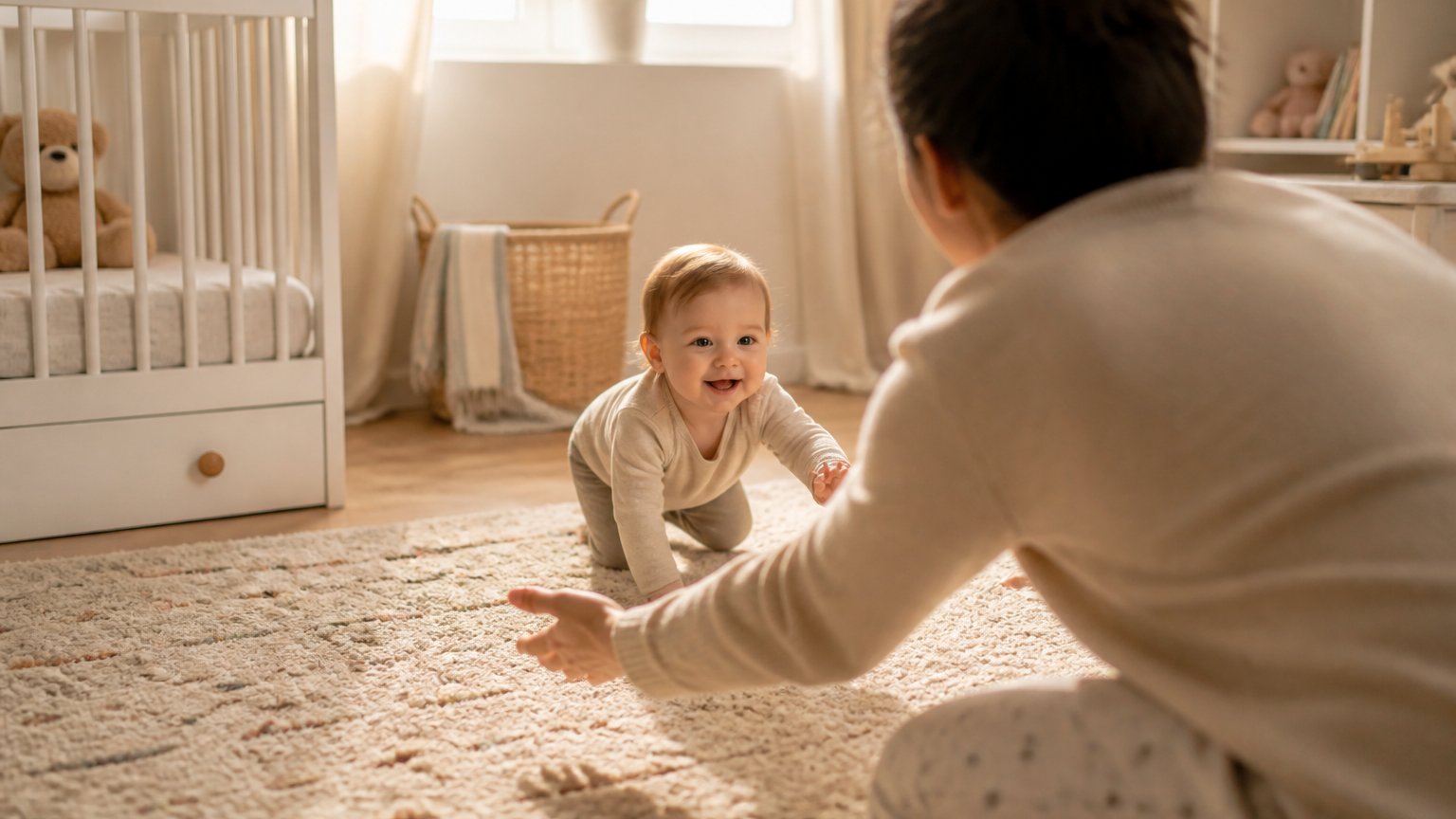
So when your toddler crawls confidently across the room to grab a toy and then races back to your lap, that round trip is the secure base at work. Your steadiness is not making them clingy. It is giving them the confidence to let go, precisely because they trust they can always come back.
How do you actually build secure attachment with your baby?
Secure attachment style baby bonding is built through responsive, attuned, consistent, and warm caregiving. That sounds like a lot, but in practice it comes down to noticing your baby's cues and responding reliably, over and over. Your baby learns "my signals matter and my person answers," and that lesson becomes security.
A helpful frame is serve-and-return. Your baby serves a cue, a babble, a gaze, a reach, or a cry, and you return it with attention. You catch their eye and smile back. You follow where they are looking. You answer their coos with words of your own. You pick them up when they lift their arms. None of this has to be perfect or constant. These tiny exchanges, woven through ordinary days, are the actual mechanism of bonding. Everyday ways to build it include:
- Making frequent eye contact and smiling during feeds and diaper changes
- Responding promptly to cries with holding, soothing, and meeting the need
- Talking, singing, and narrating so your baby hears your voice often
- Playing back-and-forth games like peek-a-boo as they get older
- Keeping gentle, predictable routines so the day feels safe
- Offering plenty of warm physical touch and holding
Can you spoil a baby with too much love?
No. You cannot spoil a baby by loving them, holding them, or responding to their cries. This worry comes from an older era of parenting advice that has not held up. Modern research points the other way. Consistently comforting a distressed infant does not make them demanding or dependent. It teaches them that the world is responsive and that they can rely on the people who care for them.
Babies do not cry to manipulate. A young infant does not yet have the developmental ability to do that. Crying is their only language for "something is wrong," and answering it is how trust is built. So hold your newborn as much as you and they want. That closeness is doing quiet, important work.
What does "good enough" parenting really mean?
Here is the phrase I wish every new parent heard on day one. The pediatrician and psychoanalyst Donald Winnicott coined the idea of the "good enough" parent, and it is genuinely freeing. Secure attachment does not require you to read every cue correctly or respond instantly every time. It requires you to be attuned often enough, and to repair the misses.
Research on attachment suggests caregivers only need to get it "right" a fraction of the time for a child to feel secure. When you misread your baby, respond late, or lose your patience, the relationship is not broken. What matters is the repair. You come back, you soothe, you reconnect. Babies learn as much from these ruptures and repairs as from the smooth moments, because they learn that closeness can be restored.
What if you work, use childcare, or missed some cues?
Many loving parents carry guilt about this, so let me be direct. Secure attachment is about the quality of your connection, not the number of hours logged. Working parents build strong bonds through attentive, present time together, even when that time is limited. Quality of attunement matters more than sheer quantity.
Childcare does not undo secure attachment either. Babies can form healthy attachments with several consistent, responsive caregivers, and having more than one trusted adult is a good thing, not a threat to your bond. Feeding choices work the same way. Breastfeeding can be a bonding time, but attachment is built through overall responsiveness, and bottle feeding offers the very same closeness, eye contact, and warmth. Wherever your family lands on these questions, the core ingredient is the same steady, loving attention.
One gentle note. If your baby seems consistently hard to soothe, rarely seeks comfort, avoids eye contact, or if you feel persistently anxious or low, it is always okay to talk with your pediatrician. They can offer reassurance or support and help you sort typical variation from anything worth a closer look.
Why does secure attachment matter later on?
Secure attachment in infancy lays groundwork that reaches far beyond the baby years. Children who feel securely attached tend to develop stronger emotional regulation, more confidence to explore and learn, and a template for what safe, trusting relationships feel like. That early sense of "I am worth responding to" shapes how they relate to friends, teachers, and eventually partners.
It is worth holding this with perspective, though. Attachment is powerful, but it is one of many influences on how a child grows. Temperament, later relationships, community, and countless experiences all play a part. A secure start is a gift, and it is not the only chapter of the story. Children are resilient, and warmth offered at any stage still counts.
Where can a relationship advisor fit in for parents?
The early years ask a great deal of you, and pouring so much care into a baby can leave your own emotional needs, your relationship, and your sense of self running low. Sometimes it helps to have a warm, caring outside perspective on the season you are in. A relationship psychic or advisor can offer that kind of listening ear, a space to reflect on how you are holding up, how you and a partner are connecting through the sleepless stretch, and what you want for yourself alongside your child. If that appeals to you, the love and relationship advisors at Psychic Source are available for private, judgment-free conversations. This kind of guidance is for adults 18 and older and is meant for insight, perspective, and self-reflection. It is a source of support and encouragement, not a replacement for therapy, and never a substitute for your pediatrician's care.
Common questions about secure attachment in babies
What is secure attachment in a baby?
Secure attachment in a baby is a deep, trusting bond built on a caregiver's reliable, warm responses. The baby feels safe and confident that their needs will be met, which lets them relax, accept comfort when upset, and use a trusted adult as a steady base for exploring the world. It forms through everyday responsive care over many months and becomes the emotional foundation a child carries into later relationships.
What are the signs of secure attachment in infants and toddlers?
In infants, look for seeking comfort when upset and calming once soothed, settling to your familiar voice or touch, and preferring primary caregivers. In toddlers, watch for using you as a secure base to explore and returning to check in, some protest at separation with genuine relief at reunion, and turning toward you when frightened or unsure. The security shows most clearly in how easily your child recovers with your help.
Can you spoil a baby by holding them too much?
No. You cannot spoil a baby with love, holding, or responsiveness. Young infants cannot manipulate, and crying is simply their way of signaling a need. Answering that need consistently teaches a baby that the world is responsive and their people are reliable, which builds security rather than dependence. Holding your baby often and comforting distress promptly supports healthy attachment and emotional development.
Do you have to be a perfect parent to raise a securely attached baby?
Not at all. The idea of the "good enough" parent captures this well. Secure attachment does not require flawless, instant responses. It grows when you are attuned often enough and repair the moments you miss. When you misread a cue or lose patience, coming back to soothe and reconnect is what teaches your baby that closeness can be restored. Ruptures followed by repair are a normal, healthy part of building trust.
The takeaway on secure attachment in babies
Here's what matters most. Secure attachment is not built in one grand gesture but in the steady accumulation of small, loving responses, and you do not have to get every one of them right. Answer your baby's cues when you can, comfort their distress without fear of spoiling, and trust that repairing the inevitable misses is part of the work, not a failure of it. The bond you are forming, warm and reliable and imperfect, is exactly the kind that helps a child feel safe enough to grow. You are almost certainly doing better than you think.
