
Reactive Attachment Disorder in Adults: Signs, Effects, and Support
Date 11/11/2026
Reactive attachment disorder (RAD) is a childhood condition that develops when a baby or young child lives through severe neglect, abuse, or repeated changes in caregivers and cannot form a secure bond. It shows up as a child who rarely seeks or accepts comfort and stays emotionally withdrawn. Clinicians diagnose it before age five, so RAD is not a formal adult diagnosis. Even so, the effects of that early deprivation can carry forward, leaving some adults with lasting struggles around trust, emotional regulation, and closeness.
If you found your way here because the phrase "reactive attachment disorder in adults" seemed to describe you or someone you love, I want to slow down and be clear with you from the start. RAD itself is a diagnosis clinicians give to young children. That does not mean your experience is imaginary. The wounds from very early neglect are real, and they can echo for decades. In this article I want to sort out what RAD actually is, why you almost never see it labeled in a grown adult, what the lingering patterns can feel like, how they differ from more common attachment styles, and what genuinely helps. Gently, and without pretending to hand you a diagnosis.
What is reactive attachment disorder, really?
RAD sits in a small group of what clinicians call attachment disorders. It starts in infancy or the toddler years, before a child has the words to explain any of it. The core picture is a young child who has learned, painfully early, that reaching out for a caregiver does not reliably bring comfort. So they stop reaching.
The DSM-5-TR, the manual therapists in the United States use, describes a consistent pattern of inhibited, emotionally withdrawn behavior toward caregivers. A child with RAD rarely or minimally seeks comfort when distressed, and rarely or minimally responds to it when it is offered. On top of that, there is a persistent social and emotional disturbance: little responsiveness to others, limited positive emotion, or bouts of unexplained irritability, sadness, or fear even during calm, ordinary moments with a caregiver. The manual is specific that this grows out of extremes of insufficient care. Not a bad week. A pattern.
Can adults actually be diagnosed with RAD?
Short answer: no, not in the formal sense. The diagnostic criteria require that the disturbance be evident before age five, in a child with a developmental age of at least nine months. That age window is baked into the definition. It reflects what the disorder is about, the failure to form those first selective attachments during the window when they normally take shape.
So when someone types "reactive attachment disorder in adults," they are usually looking for something the label does not quite cover. Clinicians who study adult outcomes tend to talk about attachment disturbances or trauma-related patterns rather than adult RAD. A 2023 study in the Journal of Clinical Psychiatry that followed adult outcomes for people with a history of RAD found that those early attachment problems can leave a lasting mark on relationships and emotional life. The name changes as you grow up. The underlying story of early deprivation does not simply vanish.
Why do so many adults still relate to it?
Because the feelings are recognizable, even when the label technically belongs to childhood. Someone who spent their earliest years in an orphanage, or bounced between foster placements, or grew up with a caregiver who was severely depressed, addicted, or absent, may reach adulthood carrying a set of survival habits that once kept them safe. Keep people at arm's length. Do not need anyone. Read every room for danger.
Those habits made sense for a small child with no other options. The trouble is that they tend to overstay. A partner reaching for closeness can register as a threat. Kindness can feel suspicious rather than warm. None of that means a person is broken or beyond reach, and I want to hold onto that as we go.

How does early neglect shape a person for so long?
In the first years of life, a child's nervous system is learning a basic question over and over: when I am scared or hungry or hurting, does someone come? When the answer is a reliable yes, the child builds an internal sense that people are safe and that comfort exists. That is secure attachment, roughly speaking.
When the answer is mostly no, or wildly unpredictable, the developing brain adapts to a world that feels unsafe. Stress-response systems can stay on higher alert. The circuitry for soothing and for reading other people's warmth may get less practice. This is why the effects can be so stubborn. They were wired in during a formative stretch, before memory or reason had much say. Later experiences, thankfully, can rewire a great deal. But the starting point matters, and pretending otherwise helps no one.
What do reactive attachment disorder symptoms in adults tend to look like?
There is no official checklist for RAD in adults, and I want to be honest about that. What follows is drawn from clinical writing about the adult outcomes of early attachment disruption, not from a diagnostic test. Read it as a mirror to reflect on, not a verdict. Many people relate to a few of these and not others, and that is completely normal.
| Lingering pattern | How it can show up in daily adult life |
|---|---|
| Difficulty trusting others | Assuming people will let you down, holding back even with those who have earned your confidence |
| Trouble regulating emotions | Swinging between intense feeling and a flat numbness, or shutting down when things get heavy |
| Trouble sustaining closeness | Pulling away right when a relationship deepens, or fearing abandonment and closeness at the same time |
| Feeling detached or numb | Watching your own life from a slight distance, struggling to feel connected even to people you care about |
| A strong need for control | Managing situations tightly because helplessness once felt unbearable |
| Discomfort with affection | Freezing, deflecting, or feeling exposed when someone offers care, praise, or physical closeness |
| Low self-worth | A quiet, persistent sense of being unworthy, unlovable, or fundamentally too much or not enough |
Notice how many of these are protective. Detachment guards against disappointment. Control guards against chaos. They are old armor. The work, when someone is ready for it, is less about tearing the armor off and more about learning it is safe to set it down in the right company.
How is this different from ordinary insecure attachment?
This is where a lot of the online confusion lives, so it is worth pinning down. Insecure attachment styles, anxious, avoidant, and disorganized, are common. They exist across a wide swath of the general population and grow out of all sorts of ordinary imperfect parenting and later life experiences. Someone with an avoidant style might value independence a bit too fiercely and get twitchy about needing a partner. That is a style, not a disorder.
RAD is a different order of severity. A few distinctions help:
- Insecure attachment styles are widespread and sit on a spectrum. RAD is rare and clinically severe.
- Insecure styles can come from many sources, including inconsistent but basically present caregiving. RAD grows specifically from grossly inadequate care: profound neglect, abuse, or a child with no stable caregiver at all.
- An avoidant or anxious adult usually formed some attachments, however wobbly. A child with RAD struggled to form selective attachments in the first place.
- Insecure attachment is a way of relating. RAD is a diagnosed disorder of early childhood with defined criteria.
Why does the distinction matter to you, reading this at home? Because it changes the story you tell about yourself. Recognizing an avoidant streak invites everyday growth. Suspecting that your patterns trace back to severe early deprivation is worth exploring with a professional who can actually assess it, not a quiz and not an article. Including this one.
Why is trusting people so hard after early neglect?
Trust is not really a decision. It is closer to a felt sense, built from thousands of small experiences of reaching out and being met. For a child whose reaching went unanswered, that felt sense never got to solidify. So as an adult, the body can flag closeness as risky even while the mind knows better.
You might notice it as a reflex. Someone gets too kind, too consistent, too close, and something in you tightens and looks for the exit. That is not a character flaw. It is an old alarm system doing the job it was trained for. The hopeful part, and it is genuinely hopeful, is that trust can be relearned. Slowly, through safe and repeated experiences of being met, the nervous system can update its expectations. It takes time and usually some support, but it happens all the time.
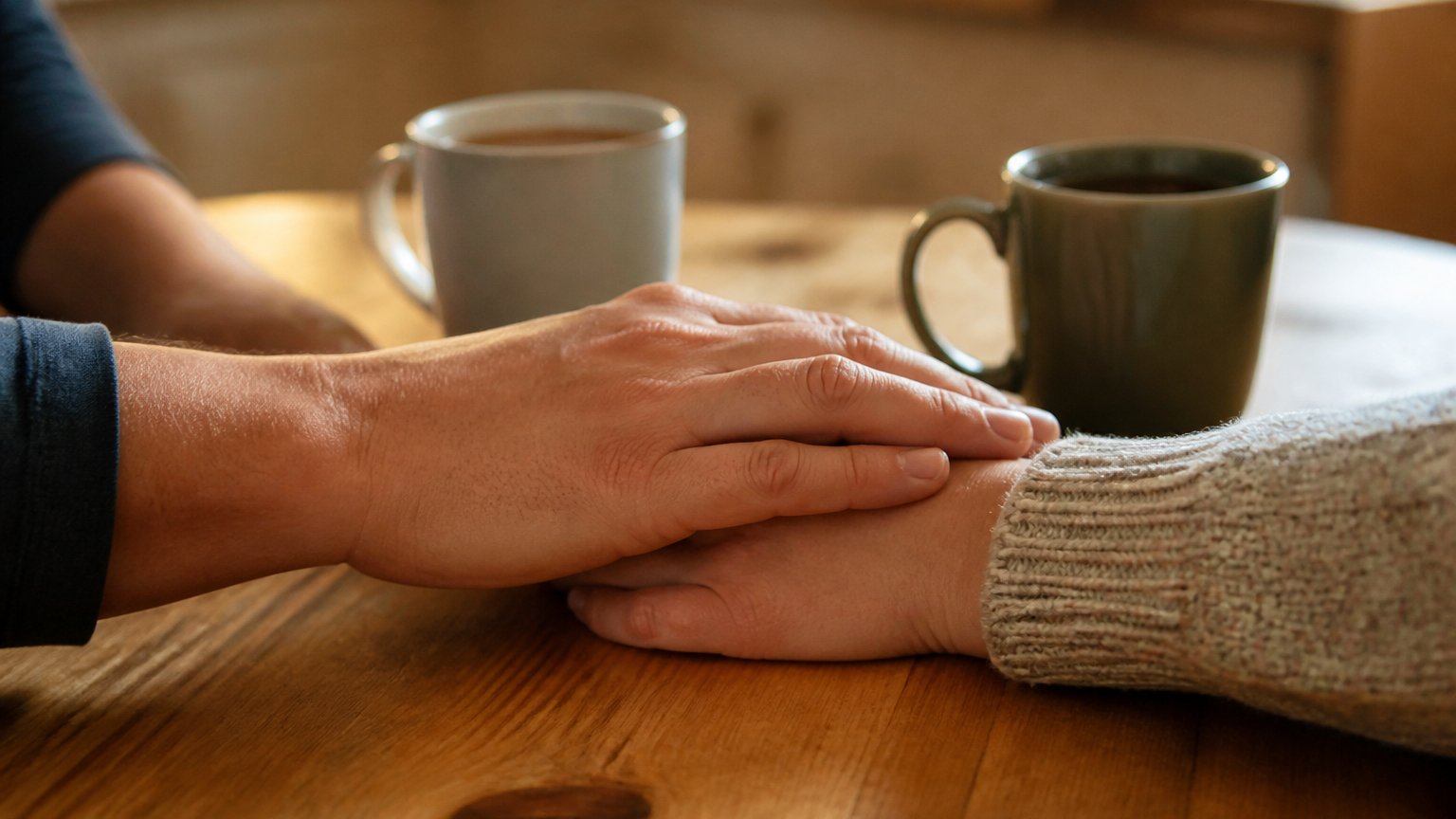
How do these patterns play out in adult relationships and dating?
Often quietly, and often in ways a partner misreads. A person carrying these wounds might seem cool or aloof when they are actually terrified of being left. They might test a relationship, pushing to see whether the other person stays. They might struggle to say what they need, because needing was once dangerous, and then feel resentful when those unspoken needs go unmet.
Dating can feel like a series of near-misses. Getting close, then bolting. Choosing partners who confirm the old belief that people cannot be trusted. If any of this lands, please hear that it is a pattern, not a life sentence. Plenty of people with rough early starts build steady, loving, lasting relationships. The path there usually runs through understanding the pattern first, then practicing something different, one small risk at a time.
What actually helps adults heal from early attachment wounds?
Trauma-informed therapy is the backbone of it. For adults living with the aftereffects of early attachment disruption, approaches like attachment-based therapy and trauma-focused cognitive behavioral therapy are commonly used, and a licensed mental-health professional can assess what fits your situation and tailor the work. The Mayo Clinic and other clinical sources point to this kind of professional, individualized support rather than any single quick fix.
Beyond formal therapy, a few things tend to help the process along. Steady, safe relationships where you get to practice being seen. Learning to name and sit with emotions instead of numbing them. Self-compassion, which for a lot of people is the hardest and most important muscle to build. And patience, because rewiring old survival patterns is slow, nonlinear work with good days and rough ones. Progress here rarely looks like a straight line. It looks like slightly more ease, slightly more often.
A gentle note before you go further
I want to be direct about the limits of what you are reading. This article is educational, and it is not a diagnosis. Nothing here can tell you what is going on for you specifically. If any of this resonates, especially the heavier parts, please reach out to a licensed mental-health professional who can assess your history properly and support you with care that fits your life.
Some people also find comfort in a caring outside perspective while they do the deeper work, and a compassionate conversation with a relationship advisor at Psychic Source can offer a moment of reflection and encouragement for adults 18 and over. Think of that as extra support alongside professional care, never a stand-in for it. A reading is for insight and self-reflection, not treatment, and it is not a substitute for therapy or a clinician's assessment.
Frequently asked questions
Can adults be diagnosed with reactive attachment disorder?
Not formally. RAD is defined as a disorder of early childhood, and the diagnostic criteria require symptoms to appear before age five in a child with a developmental age of at least nine months. Clinicians do not typically diagnose RAD in adults. When early attachment wounds persist, professionals usually describe them as attachment disturbances or trauma-related patterns instead, and those lasting effects can still be very real and worth addressing.
What are reactive attachment disorder symptoms in adults?
There is no official adult checklist, but clinical writing on adult outcomes of early neglect describes recurring themes. These include difficulty trusting people, trouble regulating emotions, struggles forming or keeping close relationships, feeling detached or numb, a strong need for control, discomfort accepting comfort, and low self-worth. These are observed patterns rather than formal diagnostic criteria, so relating to a few of them is not the same as having a diagnosis.
How is RAD different from an insecure attachment style?
Insecure attachment styles, such as anxious or avoidant, are common and sit on a spectrum across the general population, often shaped by ordinary inconsistent caregiving or later experiences. RAD is rare and clinically severe, rooted specifically in grossly inadequate care during early childhood, like profound neglect, abuse, or the absence of any stable caregiver. Both can affect relationships, but RAD reflects a deeper failure to form those first attachments at all.
Can adults recover from the effects of early attachment trauma?
Yes, meaningful change is possible. Trauma-informed approaches like attachment-based therapy and trauma-focused cognitive behavioral therapy are commonly used to address lingering attachment difficulties, and a licensed professional can tailor support to your history. Healing tends to be gradual and nonlinear, helped along by safe relationships, learning to name emotions, and self-compassion. Many people with hard early starts go on to build steady, trusting relationships with the right support over time.
Where this leaves you
Here's what matters most: reactive attachment disorder is a childhood diagnosis, so you are unlikely to be handed that exact label as an adult, but the effects of severe early neglect can absolutely follow you and deserve real care. If the patterns in this article feel familiar, that recognition is a starting point, not a sentence. The armor you built as a child made sense. With safe relationships, honest support, and a good professional in your corner, it is possible to loosen it, to relearn trust a little at a time, and to move toward the steadier, warmer connection you have always deserved.
