
Free Birth Chart Calculator & Natal Chart Reading
Date 8/12/2026
A birth chart calculator is a tool that maps the sky at the exact moment and place you were born. You feed it your birth date, time, and location, and it plots the Sun, Moon, and planets around a 360-degree wheel split into twelve houses, with the zodiac signs on the outer ring. The result, also called a natal chart, shows which sign and house each planet fell in, plus the angles they form. Astrologers read it as a personal blueprint of temperament, timing, and life themes.
I've been reading charts for people at Psychic Source for years, and the first thing I tell everyone is this: your birth chart is not some vague horoscope pulled from a newspaper. It's yours alone. The calculator above builds it from three simple facts, and in a few seconds you get the same wheel a professional astrologer would draw by hand. In this article I'll walk you through what a natal chart actually is, the pieces that make it up, why the calculator asks for your exact birth time, and how to start reading your own result without feeling lost.
What Exactly Is a Birth Chart?
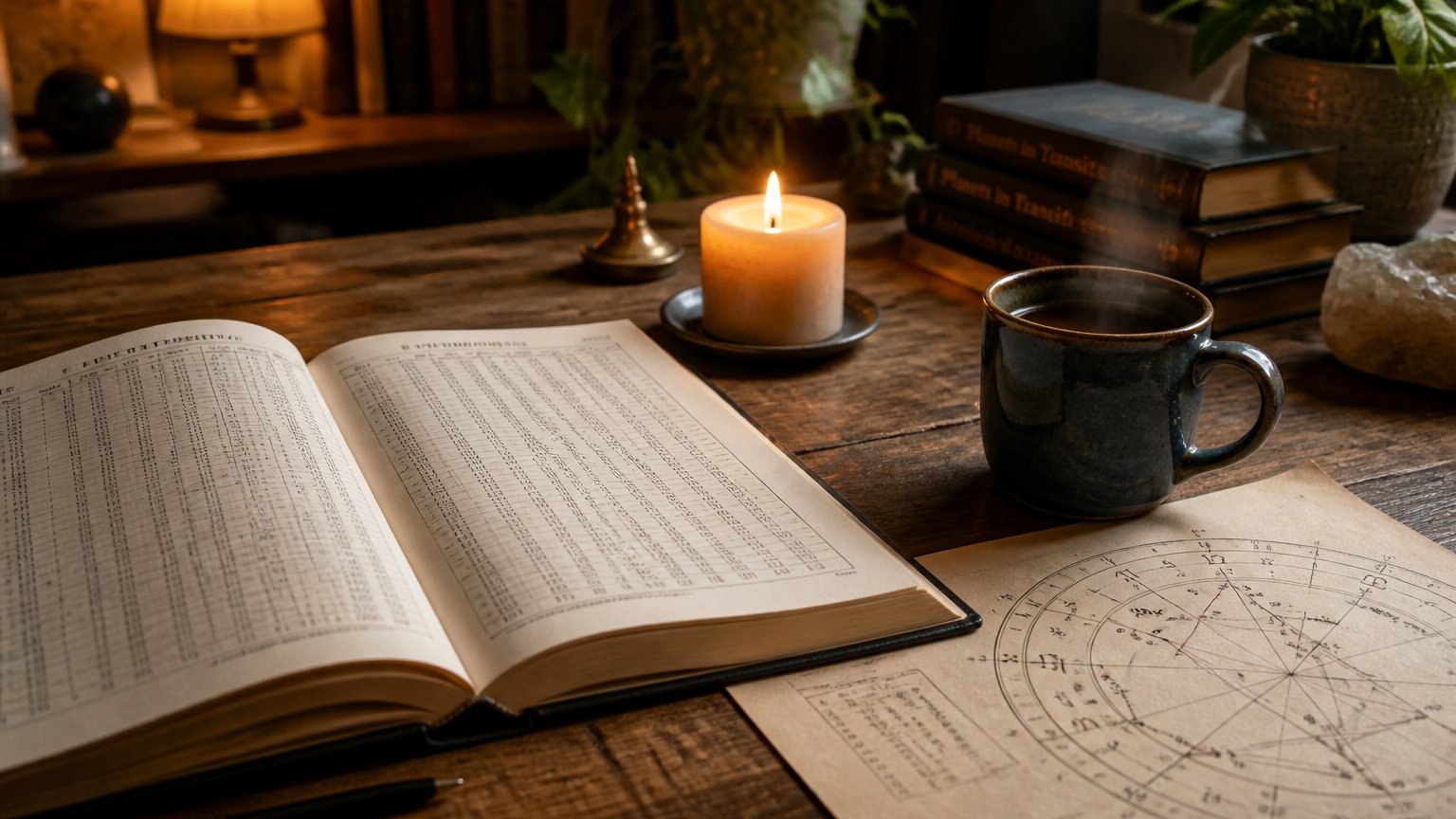
Picture the sky freezing at the second you took your first breath. Every planet, the Sun, the Moon, all of it, locked in place above the hospital or house where you arrived. That frozen snapshot is your birth chart. Astrologers also call it a natal chart, from the Latin word for birth, and the two terms mean exactly the same thing. There's no difference. Some folks use one, some the other, and I switch between them out of habit.
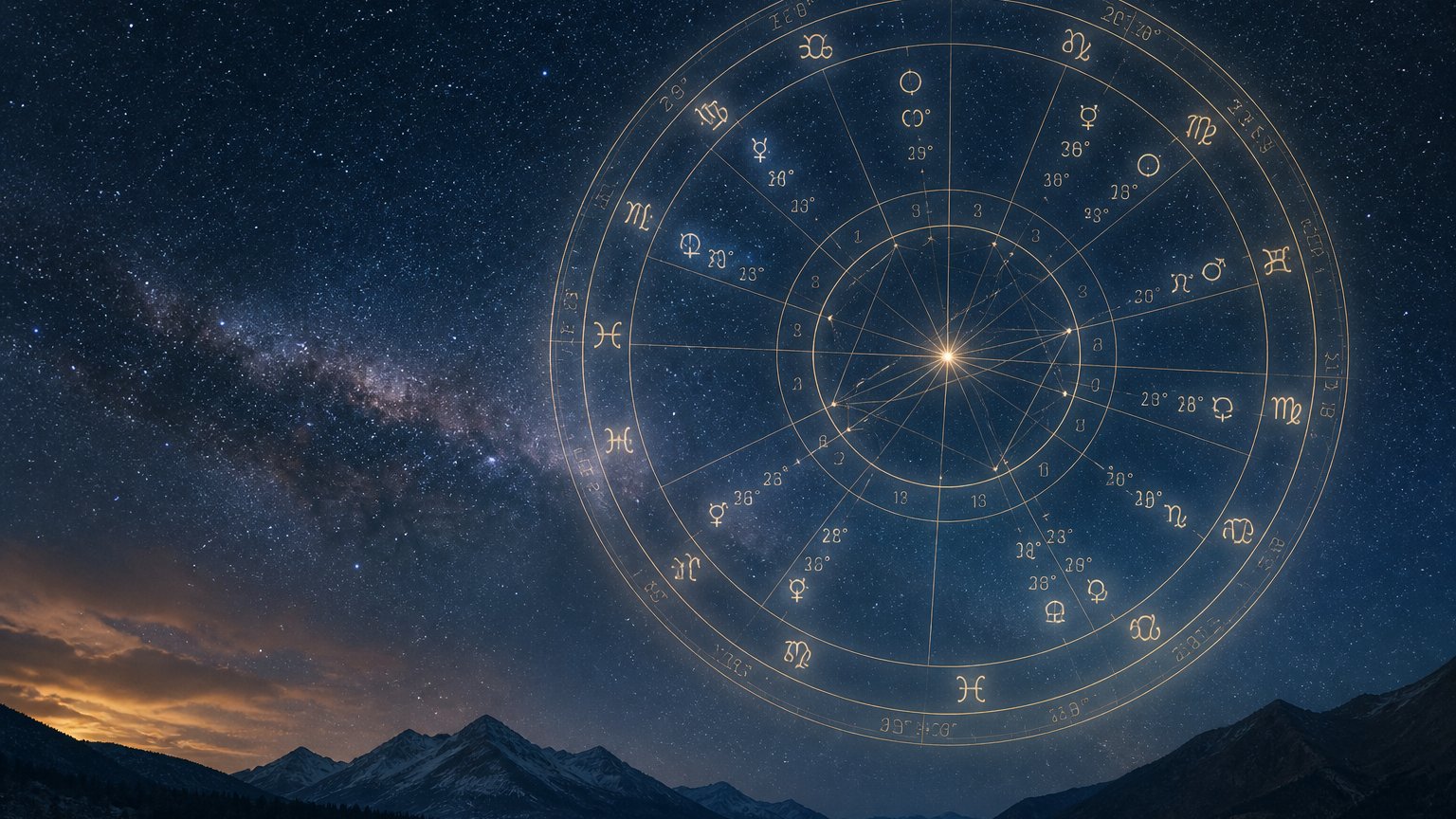
The chart itself looks like a circle. The center represents Earth, which is you, looking out. The outer ring holds the twelve zodiac signs. Scattered around the wheel are little glyphs marking where each planet sat. In my experience people expect it to look complicated, and honestly, at first glance it kind of is. But every symbol on that wheel is just answering three questions: what, how, and where. Once you see it that way, the whole thing gets a lot friendlier.
What Are the Core Pieces of Your Chart?
There are four moving parts, and they all work together. The planets are the "what," the raw drives inside you. The signs are the "how," the flavor or style each drive takes on. The houses are the "where," the area of life where that energy shows up. And aspects are the conversations between planets, the angles that tell you whether two parts of your nature get along or grind against each other.
Here's the example I always reach for. Say your chart shows Venus in Leo in the seventh house. Venus is the planet of love and affection. Leo is bold, warm, a little theatrical. The seventh house rules partnerships. Put those together and you've got someone who loves generously and out loud, who wants romance to feel like an event, not a quiet afterthought. That's the whole grammar of astrology in one line: planet, sign, house.
People often ask how many planets we count. Ten, technically. Astrologers include the Sun and Moon as "luminaries" even though they aren't planets in the astronomical sense, and we keep Pluto in the lineup even after astronomers reclassified it as a dwarf planet back in 2006. In astrology Pluto still carries real weight, so it stays.
How Do the Signs and Houses Actually Differ?
This trips up a lot of beginners, and fair enough, because both come in sets of twelve. The signs are personality flavors. Aries pushes forward, Taurus digs in, Gemini talks, Cancer nurtures, and so on through Pisces. The houses are life zones instead: the first house is your identity, the fourth is home, the tenth is career and reputation. A planet can sit in Cancer (a sign) inside your tenth house (a life zone) at the same time. The sign colors how it behaves. The house tells you where it aims that behavior.
Below is a quick reference for what each house tends to govern. I keep something like this taped near my desk, because even after years I still glance at it when a chart lands somewhere unusual.
| House | Area of life it tends to rule |
|---|---|
| 1st | Self, identity, first impressions |
| 2nd | Money, values, self-worth |
| 3rd | Communication, siblings, learning |
| 4th | Home, family, roots |
| 5th | Creativity, romance, play |
| 6th | Work, health, daily routines |
| 7th | Partnerships and close relationships |
| 8th | Intimacy, shared resources, transformation |
| 9th | Travel, philosophy, higher learning |
| 10th | Career, public life, reputation |
| 11th | Friendships, community, hopes |
| 12th | The subconscious, solitude, spirituality |
Why Does the Calculator Need Your Exact Birth Time?
This is the question I get more than any other, usually from someone a little annoyed they have to dig up their birth certificate. So let me explain why it genuinely matters. The Sun moves through a whole sign in about a month, so your Sun sign is safe even if you only know the date. But the Ascendant, your Rising sign, changes roughly every two hours as the Earth turns. The house cusps shift right along with it.
Put simply, without an accurate time the calculator can still tell you your Sun, and probably your Moon, but it can't reliably place your Rising sign or your houses. And those are where a lot of the personal texture lives. Two people born the same day in the same city, one at dawn and one at dinner, can end up with completely different chart wheels. If you're curious about how much this shapes a full reading, this is exactly the kind of nuance a live astrology reading with an advisor can untangle for you, because a person can ask follow-up questions a tool can't.
Why Does Birth Place Matter Too?
The place pins down the geography. Your birth location gives the calculator the latitude and longitude it needs to figure out where the horizon sat relative to the sky at that moment. That horizon line is what sets your Ascendant and divides your houses. A baby born in Sydney and a baby born in London at the very same instant see totally different skies overhead, so their charts differ even with identical timestamps.
Here's the good news: you don't need the exact hospital address. The city is plenty. The calculator already knows the coordinates for the place you type in and does the math behind the scenes.
How Do You Actually Use the Calculator on This Page?
It's about as simple as filling out a form. Enter your birth date, then your birth time as precisely as you can manage, and finally the city where you were born. Hit calculate. In a moment you'll see your chart wheel, along with a readout of each planet's sign and house placement.
Don't panic if your time is a guess. A lot of people simply don't know it, and that's fine. If that's you, try entering noon as a placeholder. Your Sun, Moon, and most planetary signs will still be accurate, and you'll just take the Ascendant and house placements with a grain of salt until you can track down the real time. By the way, older birth certificates sometimes list the time in a corner nobody thinks to check, so it's worth a look.
Where Should a Beginner Start Reading?
Start with the big three: Sun, Moon, and Rising. I promise this is the on-ramp. Everything else can wait.
- Your Sun sign is your core, the identity you grow into. It's the one most people already know.
- Your Moon sign is your inner emotional world, how you feel and what soothes you when nobody's watching.
- Your Rising sign, the Ascendant, is the face you show the world and how strangers first read you.
Once those three click, you'll find the rest of the chart opens up on its own. Read each planet as a short sentence: planet in sign in house. Mercury in Virgo in the third house? That's a sharp, detail-loving thinker who communicates precisely. Try it with your own placements. What I've noticed is that people learn faster narrating their chart out loud than staring at it in silence. If you want a deeper foundation in how these pieces fit together, there's a whole world of astrology guidance and resources to grow into once the basics feel comfortable.
What Do Aspects Add to the Picture?
Aspects are the relationships between planets, measured by the angle between them on the wheel. They're the reason a chart reads like a living personality instead of a list. This is the part I love, honestly, because it's where contradictions in a person start to make sense.
| Aspect | Angle | General feel |
|---|---|---|
| Conjunction | 0 degrees | Energies blend and reinforce each other |
| Sextile | 60 degrees | Easy opportunity and support |
| Square | 90 degrees | Friction that pushes growth |
| Trine | 120 degrees | Natural harmony and flow |
| Opposition | 180 degrees | Tension asking for balance |
A square between your Moon and Mars might explain why your feelings and your temper sometimes wrestle. A trine between Venus and Jupiter might be why kindness comes so easily to you. None of this is doom or destiny. It's just the wiring, and knowing the wiring helps you work with yourself instead of against.
How Accurate Is a Birth Chart, Really?
Let me be straight with you, because I think honesty serves you better than hype. A birth chart is a genuinely precise astronomical calculation. The planetary positions are real math, accurate to the minute if your data is accurate. That part is solid. What isn't guaranteed is the interpretation, and I'd never pretend otherwise.
Astrology is a tradition of insight and reflection, meant for adults and offered for entertainment and self-understanding, not as medical, legal, or financial advice, and never as a promise of what will happen. Trust me, I've read charts for people who read the same placement in wildly different ways, and both readings held real meaning for them. That's the nature of it. The chart offers a mirror. What you see in the mirror, and what you do with it, is yours.
What Should You Actually Do With Your Chart?
Once you've generated it, resist the urge to close the tab and move on. Sit with it a little. Screenshot the wheel and jot down your big three somewhere you'll see them. Then pick one placement that surprised you and read into just that one. Depth beats breadth when you're learning.
These days I see a lot of people using their chart as a self-reflection tool, a prompt for journaling or a conversation starter about who they are. That's a lovely use for it. And when you're ready for the layer a tool can't give you, the timing, the follow-up questions, the "but what about this situation in my life right now," that's where a real person helps. You can browse our psychic advisors and find someone whose approach to astrology feels right for you.
Questions I Get Asked Most
Is a birth chart the same as a natal chart?
Yes, completely. The two terms are interchangeable and refer to the exact same thing: a map of the sky at the moment and place you were born. "Natal" simply comes from the Latin word for birth. Astrologers use both terms depending on habit or preference, and I switch between them myself, so don't worry if you see one used in one place and the other somewhere else. There's no hidden distinction between them at all.
Can I make a birth chart without knowing my exact birth time?
You can, with one caveat. Without an accurate time, your Sun sign and usually your Moon sign will still be correct, along with most of your planetary signs. What becomes unreliable is your Rising sign and your house placements, since those shift about every two hours. If you don't know your time, enter noon as a placeholder and treat the Ascendant and houses loosely until you can find the real time on your birth certificate.
What are the big three in a birth chart?
The big three are your Sun, Moon, and Rising signs, and they're the best starting point for a beginner. Your Sun is your core identity, the Moon is your inner emotional world, and your Rising sign, or Ascendant, is how you come across to others. Together they give you a surprisingly full sketch of your personality. Once those three make sense to you, the rest of the chart becomes much easier to read and connect together.
Why does my birth location change the chart?
Your birth place sets the geographical coordinates the calculator uses to figure out where the horizon sat at your birth moment. That horizon determines your Ascendant and how your houses are divided. Two people born the same instant in different cities see different skies overhead, so their charts differ. You don't need a street address, though. Just the city is enough, because the calculator already knows its coordinates and handles the math for you automatically.
The Takeaway on Your Birth Chart
Here's what matters most: your birth chart is a personal snapshot of the sky at your first moment, and the calculator on this page hands it to you in seconds from just three facts. Start with your Sun, Moon, and Rising, read each placement as a simple sentence, and let your curiosity lead from there. You don't have to understand every angle today. Come back to it, sit with the parts that surprise you, and treat it as a mirror for reflection rather than a fixed script. You've got a whole sky worth exploring, and it's entirely your own.
